
Episode 96: Why We Chose Montessori Preschool for Our Toddlers

Most parents have said, “I’d never do that,” only to change their minds later. In this honest episode of the Babies and Business Podcast, Avram and Rachel share how they ended up enrolling their 3-year-old and 1-year-old in a Montessori preschool, even after saying they wouldn’t.
They talk about the guilt they felt, the lessons they learned, and the unexpected positives that came with the decision. They also explain how they let go of old expectations and made a choice that worked better for their family and business.
If you’re facing a tough parenting decision or feel stuck because of your situation, this episode offers support, real-life insight, and a reminder that your values can stay strong even when your plans change.
Show Notes
Key Highlights from this Episode:
- Avram and Rachel share why they felt guilty about choosing Montessori preschool, especially for their 1-year-old, and how that feeling changed over time.
- They explain how their original plan to have a nanny fell through and what made them rethink what the best care really looks like.
- Rachel talks about dealing with “good mom” expectations and how her childhood shaped the way she viewed childcare.
- Find out how seeing their 3-year-old thrive in Montessori helped shift their thinking and even made them wish they had started sooner.
- Learn why Montessori offered their kids more structure and learning opportunities than they could provide at home.
- Hear how they stayed true to their values by adjusting their schedule so they could still spend quality time with their kids each day.
- This episode is a reminder that it’s okay to change your mind and make the best choice for your family, even when it looks different from what you first imagined.
Mentions & Resources
Digital Harvest – Rachel and Avram’s SEO advertising agency, which they continue to run while raising two kids.
Mentioned Episodes
Babies and Business Episode 95 – Hiring a Nanny: A Step-by-Step Guide for Parents
Episode Transcription
Below you will find a transcript of this entire podcast episode. Enjoy!

Avram: I think parenthood more than any other time really has you eating your words. You know, because you say these things that maybe you would never do, and then you find yourself in a situation where you’re like questioning everything. You know, like before your parents, you look at what everybody else is doing and then you say, I would never do that.
Rachel: And you think you know better. You know, you, you think you’ve got it all figured out from the outside.
Avram: Yeah. And then life just kinda like slaps you in the face with a child thatmay not fit that mold. That’s not specifically what we’re chatting about in today’s podcast, but what we are sharing with you openly is we’ve changed our mind about something that we felt racked with guilt that we felt was maybe against the values that we have been sharing on this podcast and what we’ve seen for ourselves, and we’re sharing it because we know that everyone goes through experiences just like this
Rachel: Yeah.
Avram: And we have to be open to changing things up. What do we decide to do different?
Rachel: I think it really does have to be said. We chose to do something that we said we would never do, and that thing is putting our children into Montessori school in their preschool years, and, uh that was a big decision.
Avram: So a couple steps back, we’ve shared on the podcast a lot. One of our big things is spending time with our kids. And so in our minds, our children were not going to be, they were going to be in our house for at least the first three years. maybe even four before doing some kind of preschool, thing.
Rachel: And the way that we proposed, or we had seen it going was having a nanny in our home, having our children in our home and working, still working, getting the things done that we needed to, but having someone in our home, taking care of our children for those years.
Avram: Yeah, and I think in our minds we’re like, okay, this is the best possible thing that we can do for them. Also while considering, we’re trying to build a business and you need the time to build the business and your kids need some time away from you. And we saw the nanny as the way forward.
Rachel: Yeah.
Avram: We shared it in the recent episode.
Nanny didn’t work out for us. There was stuff that came up, nanny moved on and then we found ourselves looking at like, so what, what now with childcare.
Rachel: And it felt like we were dumped on and we’re gonna go through a couple of different things that we felt and how we worked through it. But I really wanted to touch on the thing that you said, you know, the guilt that there was a lot of guilt in this decision to put our children into preschool.
We knew that we wanted our children to have some kind of preschool. We didn’t know what that would look like. And previous to the nanny, actually putting in her notice, we had set up three days a week to start after Lincoln turned three.
Avram: Yes.
Rachel: So he would be going part-time to preschool and we were really excited about that we would continue childcare for August, our 1-year-old through until he was about three. That was our ideal thoughts in our head of he would start preschool at about three because it felt like we had arrived at a place that would work for Lincoln. The transition was, we were hoping would be easier.
All these things and, we found ourself in a situation where we had no childcare with very little notice and finding a new nanny with that short of notice and finding a quality nanny,I would say a very difficult thing to find.
Avram: Yeah, we just we’re like, do we want to go through that search again? And, I think that I had less of an issue with the three-year-old going into, preschool.
Rachel: Yeah, agreed.
Avram: We did look at, like you said, the three days first, and then the more we thought about, I was like,why not have him going there five days a week?
Rachel: When the nanny put her notice in, that was the first thing we said. Mm-hmm. We can take care of childcare for Lincoln, no brainer. Because he would go three days for preschool and then the other two, the nanny would be taking care of him at our hou
se anyway. So we were just going to transfer that to the facility and they were able to accommodate that on the same schedule that he was set to start right after his birthday.
Avram: The guilt that I had was around sending the 1-year-old
Rachel: Me too.
Avram: Because it’s like, well, hold up. This is still part of, in, in our minds, the incubation period for our children, and is he ready? Like he is never been away from us.
Rachel: Yeah,
Avram: For this much time. And I think that that was, it took the whole two weeks of the nanny’s notice for us to even start thinking about something different.
So we were looking at the enrollment fee for Lincoln and then thinking about, starting to think about,
Rachel: When I was looking at the fee okay, going from, part-time to full-time and we had talked to your mom, she’s helping us with, some of the childcare costs as part of the inheritance that she got from her parents and all that stuff but, we had talked to her and she’s like, oh, that’s, that’s a no brainer. We, we can totally do that. And then when we had called in to make that change for Lincoln, I was looking at the brochure that we got when we had gotten the information for Lincoln and saw the price for August. And it blew my mind because when we first started with a nanny, we thought that a facility was also outside of our price range and where we landed with our nanny, we were paying far more than one child at a Montessori school four or five days a week.
And it was a no brainer at that point for me because while I had the guilt of putting our 1-year-old into Montessori school or any preschool or any kind of care facility, we knew that we needed care and it’s a month to month thing so we can change our mind. We can put in a simple notice and that gave me a little bit of peace on that side.
Avram: So we made the decision, we’re like, we’re gonna enroll him. We still have three weeks without childcare for the 1-year-old. And I think what was great was seeing how much Lincoln enjoyed it. Even in his first week, he had some issues the first few days, like kids always regress, right?
So like, we hada potty training regression, just a lot of stimulation and things. But he was just loving it and looking forward to it, and
Rachel: he really liked his teacher.
Asking for her every day, We had a ritual going. Here at the house when we put him down for a nap, we say, or bedtime. I love you. Mommy and daddy are going to be, we always come back or when we leave the house, mommy and daddy will come back. That kind of thing. And so we had this ritual when we drop him off, there’s this little window in their classroom that is out to the hall and I would tell him, go to the window and wave goodbye to me. And that just became our easy way of dropping him off. So transition for him was so easy and painless for him, and that, that was such a relief for us, especially with the thought of August, starting in three weeks or so.
Avram: So I think the gift of it was seeing the three-year-olds start to thrive. ’cause they send you like these photos and updates and things and you get to check in with the teacher every day you pick up. And yeah, he was just doing so well and we’re seeing the number of activities and the type of care that they’re getting here.
And it was like, okay, not only is August going to be fine, he is going to get some opportunities that we nor the nanny were ever going to give him at this level.
Rachel: Absolutely. And what I found interesting at that point was how the guilt actually switched. So it switched to me feeling like, okay, I feel bad about putting my 1-year-old in, but I’m becoming more at ease with that thought because I know that it’s gonna be really good for him. And I feel bad that my 3-year-old didn’t get that opportunity.
So I had some guilt in retrospect of why didn’t we opt for this, for our 3-year-old now, I felt bad about not putting him in earlier. So that was one of the things that I felt, I felt also a factor that I was battling with was because our nanny put in the notice. I felt like the decision to put our children or August, mostly because Lincoln was going to go there part-time anyway. I felt like the decision was more forced versus a choice. So instead of choosing and looking and opting, opting for this or that and having some runway and all the things that I maybe thought it would look like, I did feel forced. But when I saw it, like we just said, seeing that he’s gonna benefit and thrive, that really changed it for me.
Avram: Yeah. I know that for you it’s kinda like a hot button feeling forced,
Rachel: Yeah.
Avram: Versus, my interpretation of stuff like that is usually okay, wonder why this is going on. Or wonder what, purpose this might serve for us. Like how maybe this is going to help.
Rachel: You know, I look back and I think when we were going through the Genesis, experience back in March, was that March.
Avram: No, it was me and we had an episode a couple ago. We’ll put in the show notes.
Rachel: Yeah. So when we were going through that experience, I’m sitting there thinking, oh, our nanny doesn’t fit where we want to go, where I want to go. This, she’s not going to help us get there. We are going to need to look for alternative, childcare. and it never occurred to me that it would not be a nanny.
But I was, in my head, I was thinking as I’m in Genesis like day two. We’ve gotta do something about this. How are we gonna do something about this? This could be an HR nightmare. So I consulted our HR person and I was starting to see what our options might be, and then we got the notice.
And, just flipping the coin on its head in, feeling forced versus having a choice. I also saw what a gift it was that she put in her notice because we were looking to make a change up anyway. So I really loved that we asked for something more different and new, and it showed up within
Avram: A week,
Rachel: within a week.
And then, whoa, we got it. It was just really cool to have that thought, have that conviction at Genesis, and then see it come about in a way that I didn’t actually predict it would look like. I didn’t maybe recognize it as a blessing or what I was looking for because it didn’t look the way I thought it would look.
Avram: I think that’s the key, right? It didn’t look the way that you thought it would look and facing this decision, we were racked with guilt and all these things that we just shared. And I think if we could have pulled the emotion out of it, which is hard to do, right? If we could have set that aside and our attachments to what we thought it should look like moving forward, I think we would’ve arrived at the decision sooner because in the end looking at it we’re like, this actually doesn’t compromise our values, like the way that we felt it would.
What does it say about us to be doing this? And are we taking the easy, are we taking the easy way out?
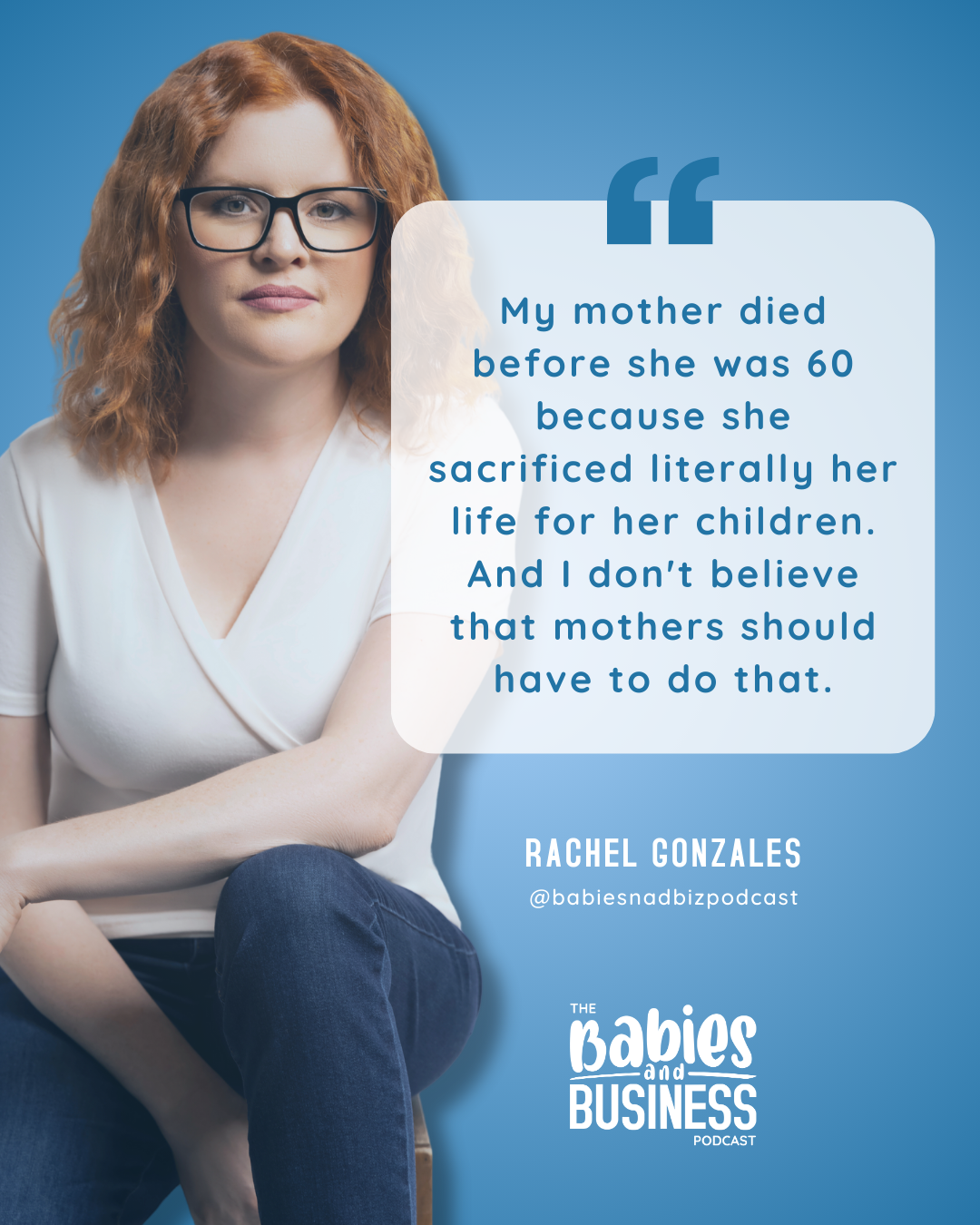
Rachel: Yes. and for me also, there were a lot of shoulds going on in the back of my head. Good moms should do this. Good. all these judgements. But what I realized is those weren’t my actual thoughts, beliefs, values, none of it. It was all programs from where I grew up. And how I was taught. Mothers sacrificed everything, even themselves. My mother died before she was 60. Because she sacrificed literally her life for her children, and I don’t believe that mothers should have to do that. That they can thrive alongside their children.
Avram: Absolutely.
Rachel: Can and dare I say, should,
but that was, one of the things that came up for me too because I felt good mothers have their kids with them. Good mothers are stay at home moms, good mothers are all these judgments. But it was comparisons of myself and how I show up versus my mom, which I feel like I put on a pedestal, but am just really coming to terms with.
Avram: I think there’s a lot there, right?
Rachel: There’s a lot.
Avram: There’s a lot there. And I also think that, now that we’ve walked the road and experienced, I think a lot of stuff is like this. you realize the benefits that you refused to acknowledge of making a different choice because you look at it and all you can see is bad, right?
Rachel: And your judgements,
Avram: you’re clouded by all the things that you judge about it. Or judge what it would mean about us, or Yeah. And there’s just like literally no way. That they would get the developmental opportunities they’re getting at Montessori with us at home.
Rachel: no way
Avram: And, a nanny could probably do some of those things with training in the background, but how much would it take on our part to help bring the supplies and the things into the house so
Rachel: And the order and the structure and,
Avram: All of that. And that’s not our particular strength either. We’ve talked about strength a lot on the podcast. These things are not things that we are innately wired to do. Some folks are right and they’re very equipped to do some of these things, but, but we’re not. And yeah. So now we’re seeing the things that, the benefits of all of it that we refuse to see before ’cause we were holding onto our judgments of what we should look like and how we should show up.
Rachel: Yeah,making this choice to put our children into this Montessori school,it didn’t actually change our values. What we did is we shifted, so we still really value time with our children. We have time in the morning, and then we have made sure that our workday is done by the time we pick them up at three.
And we have shifted some things a little bit. Maybe it’s client meetings or maybe it’s a sales meeting or whatever that is and there are some exceptions, but for the most part, we are completely done with work and we have that with our boys. But what I saw, the benefit of having them in this facility was, is that I can focus on work.
I have zero distractions, and I’m really good when I can focus. If I can put some music on and just get the project management stuff done and look at this problem and really dive deep and find this thing, find the penny. Oh my gosh. When I’m doing the financial stuff and I’m off by a penny, I gotta find that penny.
And having babies in the background does not help me find the penny, but also on the flip side the thing that brought me ease and peace around putting, especially August in preschool, was that, he was going to be better taken care of, and I would show up better when I was with him that I would be a hundred percent present with him and with Lincoln because I had already done the things that I needed to do and that are very valuable and helpful and necessary, but that I would be able to show up that when I’m juggling having August at home or August and Lincoln, I’m pretty upset. I feel frustrated. I’m not present. I need to do these things. And then it’s Monday I think about the things that I need to do and by the time I actually maybe might get to do something, it’s Friday and I look back and I didn’t get anything done in that week and all the things.
So I’ve been able to really. Settle into our new schedule and know that our babies are taken care of and we’ve gotten a lot done, not just putting out fires, because of course there are fires. The three weeks that I was with August, while we didn’t have childcare, made it very difficult because I wasn’t able to do work during the day, and then oftentimes in the evening, it just doesn’t happen either.
Avram: and I might stop you here.
Rachel: Yeah,
Avram: Because the next episode we’re gonna talk a little bit more about this and there’s just, ’cause there’s just so much to unpack about it. there’s some changes and things that we’re having here in our household and at our company Digital Harvest that we can’t wait to share with you on the podcast and bring you into our world and where we’re headed ’cause I think there’s something that you can learn, but it’s also an opportunity for us to just share our experience, be people, and for you to know that the stuff that you struggle with others do too. The stuff that you’re celebrating, others are celebrating with you as well. anything else you’d like to share before we close this one out?
Rachel: I think that’s it.
Avram: Yeah, so you have more to share. It’ll be on the next podcast, so stay tuned for that. If you liked what you learned here or you got a friend that maybe is struggling with a big choice and you can see they’re grappling with maybe their programming of when they were children, right?
Or maybe they’re, dealing with some of the things in the judgments they feel from their parents about what they should do with their kids. Why don’t you send them this podcast, copy the link, text it to ’em, just let ’em know. I was thinking about you and what’s been going on with your mom and thought that this podcast might help. Spread the word, spread the love, always looking to help others that are entrepreneurs building a life, building a family and a business. We got you, and we’ll catch you on the next episode.
Rachel: Bye for now.