

Mom’s Mental Load of Leaving Home with Kids: What Most People Don’t See
Getting out the door with kids feels like planning a military operation. As a mom, I’ve learned that the secret to a smooth exit isn’t luck but a whole lot of preparation. But the mental load that comes with this preparation? That’s something most people don’t see.
My husband Avram and I have very different approaches to family outings. While he grabs the kids and heads for the door, I’m already thinking three steps ahead, keeping track of household tasks, potential meltdowns, and last-minute surprises. This difference has become a running joke in our house, but it highlights something deeper about the emotional labor and mental burden many moms carry.
Let me share what really happens when we’re getting ready to leave the house, and why my “over-preparation” actually saves our sanity.
The Tale of Two Packing Styles: Navigating Mental Labor and Invisible Load
When it comes to family outings, Avram and I might as well be from different planets. Our approaches show just how differently we handle mental tasks, parenting, and household responsibilities.
My Approach: The Hour-Long Prep
I start preparing for our outing up to an hour before we need to leave. This isn’t because I’m slow. It’s because I know what’s coming. I gather everything we might need and pack it in advance. The diaper bag gets stocked with snacks, water, toys, and backup clothes. I lay out Lincoln’s outfit and put his shoes and socks in the bag. Nothing gets collected at the moment we’re walking out the door.
If August is napping, I’ll often have Lincoln already in the car with everything loaded. When August wakes up, he goes straight into his car seat, and we’re off. This system works because I’ve already considered many factors that could go wrong, which helps reduce stress for the entire family.
Avram’s Approach: The 15-Minute Dash
Avram believes in efficiency. He figures we’re only going out for a short time, so why pack everything? He automatically crosses items off his mental checklist. Water? Not needed for a quick walk. Snacks? We’ll be back soon. Extra clothes? What could go wrong?
The result? We often find ourselves half a mile from home with a thirsty toddler and no water. Or we’re at the park longer than expected with hungry kids and no snacks.
It’s not that Avram doesn’t care. He just doesn’t carry the same invisible labor or mental work about all the “what ifs.” He approaches outings with confidence, while I anticipate emotional needs before we even leave the driveway.
The Real Mental Load: More Than Just Packing Stuff

The mental load isn’t just about remembering to pack things. It’s about holding space for everyone’s needs, comfort, and potential problems. When I pack Fox (Lincoln’s stuffed animal), I’m not just grabbing a toy. I’m thinking about what happens if Lincoln gets upset or frustrated. Fox is his comfort item, and having him along prevents meltdowns.
This kind of invisible work touches every detail:
- Extra clothes in case of spills or accidents
- Snacks for unexpected hunger
- Water because thirst strikes at the worst moment
- Toys to keep little hands busy during waits
Each item represents a scenario I’ve already played out in my mind. It’s mental labor and emotional preparation that often goes unnoticed, especially by those who aren’t doing this work day in and day out.
Why This Mental Burden Matters for All Parents
Understanding these different approaches helps both partners appreciate what the other brings to the table. My preparation might seem excessive, but it comes from lived experience. I’ve been the mom dealing with a hungry toddler during grocery shopping with no snacks. I’ve watched Lincoln cry because Fox got left at home.
Avram’s approach has value too. He’s great at helping the kids try new things and go with the flow. He’s the potty training champion in our house because he took the time to prepare Lincoln for public restrooms. His calm helps our kids become more adaptable and resilient—skills that matter just as much as having a well-stocked diaper bag.
Parenting Tips That Help Lighten the Load
Through trial and error, we’ve found systems that help ease the heavy mental load while still keeping the kids happy and (mostly) meltdown-free.
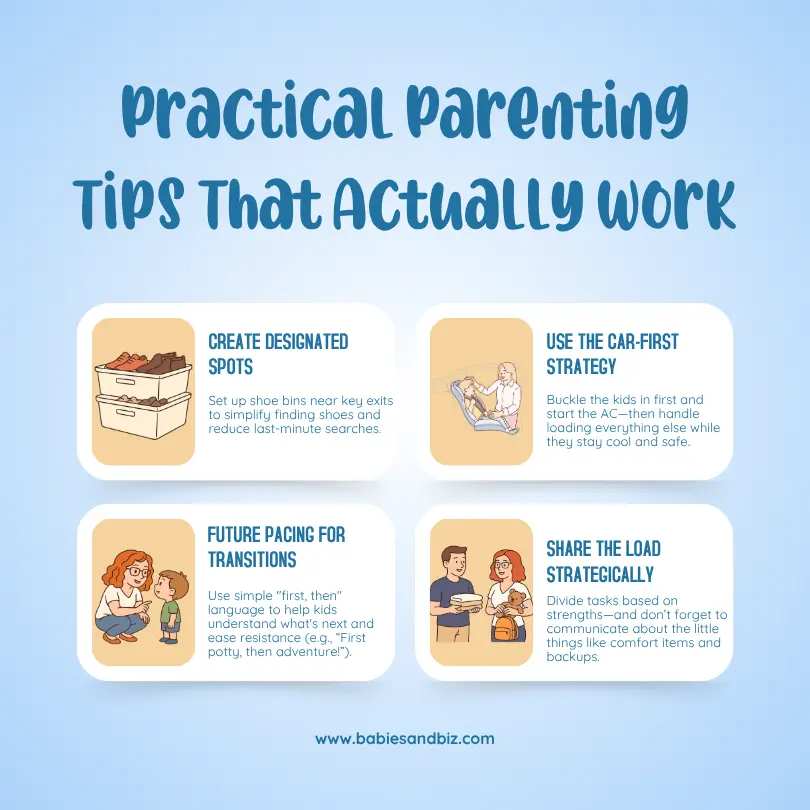
Create Designated Spots
We have shoe buckets by both the front door and the garage exit. This keeps things from turning into a scavenger hunt. Even Avram, who doesn’t handle the household chores the same way I do, knows where to check for missing shoes (unless Lincoln has left them to dry outside).
Use the Car-First Strategy
My brother-in-law taught us this lifesaver: put the kids in the car first, turn on the AC, and then load everything else. The kids are comfortable and safe while you run back and forth. It’s perfect when you’re not as prepared as you’d like to be, especially for a new mom or working mothers juggling everything.
Future Pacing = Fewer Tantrums
When Lincoln resists going potty before we leave, I say, “First potty, then we get in the car for adventure time!” It’s simple, effective, and helps prevent a nervous breakdown in the driveway.
Share the Load Based on Strengths
We’ve learned to work together strategically. Avram handles getting the kids dressed. I handle snacks, supplies, and planning meals.
But we also talk about the “invisible” items, the mental checklist that isn’t written down anywhere. Things like making sure the backup pacifier is packed or remembering school schedules. These are the certain tasks that create balance when shared.
The Hidden Work of Family Outings
The mental load of leaving home with kids goes far beyond packing bags. It’s about predicting needs, managing emotions, and trying to keep everyone from falling apart. It’s remembering that Lincoln needs Fox. That August might need a last-minute change, and that someone will definitely ask for water at the most inconvenient moment.
This invisible load usually falls on moms. Not because dads can’t do it, but because many mothers have become the default coordinators of all things family. We’re the ones providing support, handling the meal planning, and juggling household tasks, even when we’re just stepping out for an afternoon.
Making Family Outings Easier for Everyone
The goal isn’t to make every parent prepare like me or wi
ng it like Avram. The goal is to find what works for your family while honoring the mental work behind it. For many women, that work is silent and constant.
Some families thrive on flexibility. Others need structure. Most of us need something in between. The key is open conversation, acknowledging the responsibility of the home mom and the value of the partner who helps when they understand the load.
When I spend an hour prepping, I’m not being over-the-top. I’m managing the emotional labor, anticipating health issues, and making sure our relationships stay intact when someone inevitably cries in the car. When Avram takes the kids out in 15 minutes, he’s not being reckless. He’s bringing a relaxed energy that also serves us well.
Finding Your Family’s Balance: Sharing the Mental Load Moving Forward
 Every family needs their own rhythm. Maybe yours doesn’t look like ours, and that’s okay. But know this: mental labor is real. And sharing it matters.
If you’re the one constantly carrying the mental burden, talk with your partner. Explain what it feels like to always be the one saying, “Did you pack snacks?” or “Where’s the extra diaper?” Invite them to take on some of that unseen load, one more thing at a time.
If you’re the partner who usually shows up at the last second, realize that the peace your family feels often comes from someone else’s invisible labor. Just asking, “What can I take off your plate?” can change everything.
The mental load of leaving home is real, but it doesn’t have to be overwhelming. With systems, conversations, and a little bit of grace, getting out the door can feel less like a battle and more like a team win.
Want to hear how this plays out in real life? Check out Episode 93 of the Babies and Business Podcast. We get honest about household chores, feeling resentful, and why forgetting the snack bag isn’t the end of the world. We also talk about what it means to move forward together, even when your parenting styles don’t look the same way.