Episode 28: How to Turn Goals into a Strategic Plan: An Inside Look
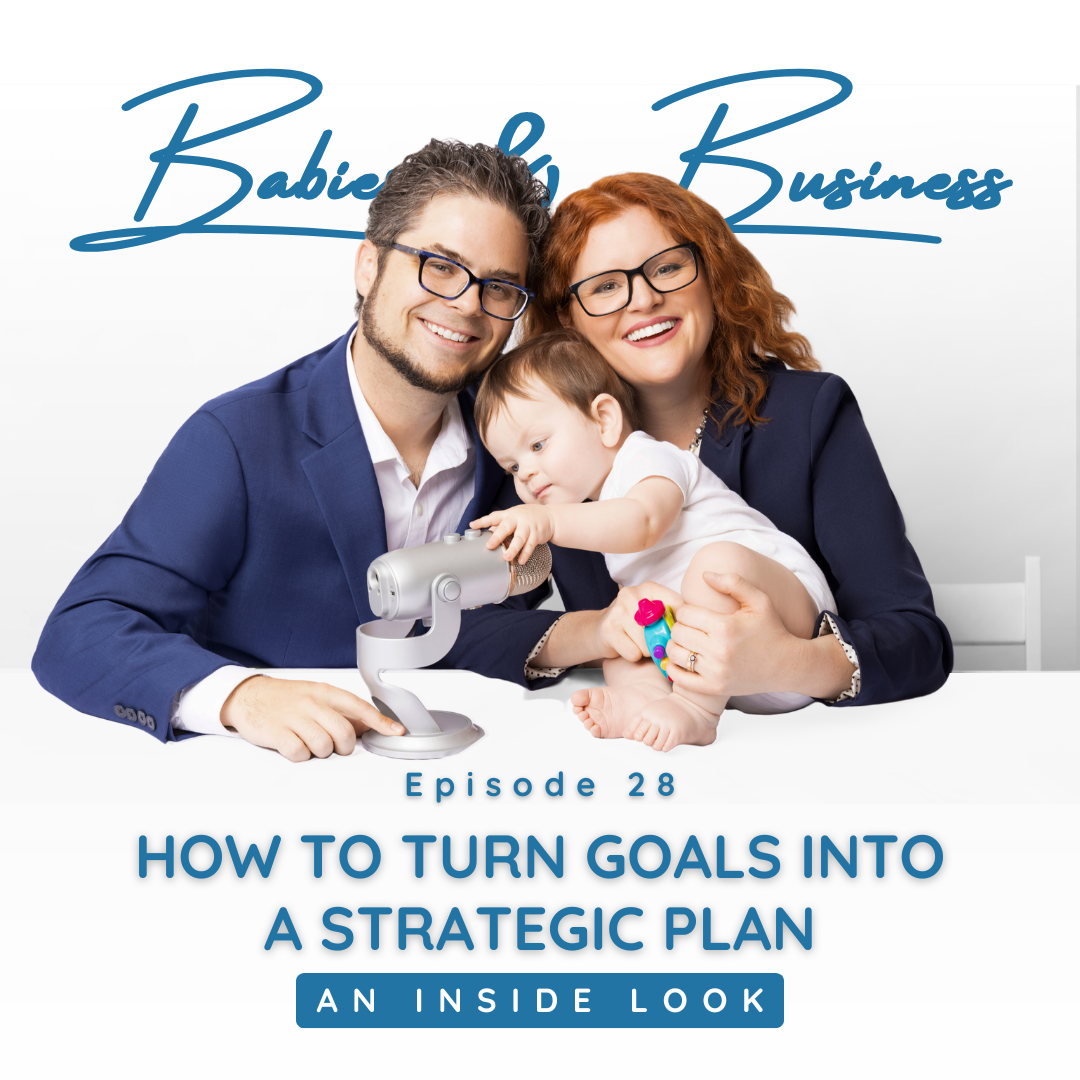
In this episode, hosts Avram and Rachel discuss strategic planning, specifically relating to their goal of doubling their podcast listenership. They review their current performance metrics, discuss their limited resources and ways to optimize them, and set steps for executing their new strategy. They explore the 80/20 rule, discuss bridging gaps, and consider ways to build on their existing strengths. They also share their plan to double down on search engine optimization and reduce their social media activity.
Show notes:
[05:05] Understanding the Gap [08:27] How available (or constrained) resources affect your planning [17:33] Leveraging skills and human capital [22:25] Identifying Key Activities [33:50] Formulating an Effective Strategic PlanMentions & Resources
E27 – Strategic Decision-Making: Knowing When to Pivot (Podcast Episode)
Digital Harvest (Avram & Rachel’s Agency)
E25 – Never in a Hurry (Podcast Episode)
Clue (Board Game)
Pareto’s Principle – The 80/20 Rule
E21 – Worst Client Ever (Podcast Episode)
Episodes in this Series:
Who’s to Blame? A 6-Pound Situation Gone Sideways – B&B Podcast Episode 17
Strategic Decision-Making: Knowing When to Pivot – B&B Podcast Episode 27
How to Turn Goals into a Strategic Plan: An Inside Look – B&B Podcast Episode 28
The 5 Pillars to Support Your Strategic Plan – B&B Podcast Episode 30
Turning Your Strategic Plan into Actionable Steps – B&B Podcast Episode 31
Turning Your Strategic Plan into Actionable Steps – How to Capture Every Detail with Simple Project Management – B&B Podcast Episode 32
Episode Transcription
Below you will find a transcript of this entire podcast episode. Enjoy!
Avram Gonzales: Hey, y’all we’re back. It’s a Avram and Rachel.
Rachel Gonzales: Hello.
Avram Gonzales: Today, we’re really excited to talk to you about strategic planning.
Rachel Gonzales: You really are.
Avram Gonzales: We are, this is like super kick out episode. And I really hope that you’re ready for just a different way of approaching strategy. And I hope you get the enthusiasm that we have for strategy and our last episode. We shared how we’re changing the strategy of our podcast. Hope you go back to that and review that I think will be powerful here.
Rachel Gonzales: Yeah, because it really does set the stage for what we’re talking about in the next couple of episodes.
So you really do want that foundation.
Avram Gonzales: Today. Yeah, exactly. Today’s about turning your goals into a strategic plan. So you’ve got the goals and things set in place. Now, how do you figure out what are the most important, big picture items? That you needed to tackle. To actually reach your goals. And that’s where strategic planning comes in. That’s where knowing how to ask really good, powerful questions.
Like the ones that we’re going to share with you today. Come in handy to set you off in the right direction.
Rachel Gonzales: Yeah. And I, you know, we’re going to talk a little bit more about this later on, but. Uh, we had a couple of things come up that inspired us to make these changes, but we’re going to talk about some of the ways that we measured the things that. That actually have informed these changes and then just really excited to get into the plan and how we’re being strategic about this.
So it’s a, we’re excited
Avram Gonzales: and in future episodes, we’re going to make this a multi-part deal. Uh, we’re going to watch these goals turned into a strategic plan today. Then we’re going to take the plan and turn it into actionable steps. Maybe that’s the next one on the last one. And then we’re going to get really nitty gritty and show you Rachel’s love, which is diving into the details of getting it all scheduled into a project management, um, format.
Like just making sure that the steps needed to reach your goals actually happen. So strap yourselves in. For a multi episode journey around strategic planning and implementation.
Rachel Gonzales: Yeah, and I think that’s, that’s the key right there is implementation. So we can talk about strategy. We can talk about planning. Talk about goals.
All we want. But if we don’t actually take it to the finish line of having something to do so, so we want to get here, but how do we get there? So if we want to go to Walmart, there are steps in between. It’s like, you need to. With us load the baby up. Get everything ready. Load the baby up. Get in the car drive there.
You got to Walmart. Okay. You did it. Those are the steps. But if you just said, we’r e going to go to Walmart and you decided you were going to leave in two minutes. He’d be sorely disappointed in this household.
Avram Gonzales: And if you promise the kids that you were going to go to Disneyland this summer, but you didn’t put in place the things that needed to happen to get there.
Rachel Gonzales: Right.
Avram Gonzales: You’re gonna have some sad babies.
Rachel Gonzales: Yeah. So, you know, we, we want to keep our, keep our promises, but also not deflate ourselves because we’re not able to get the things done. So love this, uh, This, uh, series that we’re going to be talking about because it’s really going to take us. Through that entire process.
Avram Gonzales: And we’re going to use the podcast that Babies and Business Podcast, as an example, throughout these episodes to show you real life, how to apply the things that we’re sharing with you in every episode.
So let’s jump into the topic for today. There’s a couple different areas we’re going to touch on as we turn our goals into a strategic plan. So if you haven’t yet go back, watch, listen to episode 27. It’s where it all started. And then today we’re going to first. Look at, let’s see there’s 1, 2, 3, 4.
We do have a formula. We’re going to follow today. A little bit of a format. There are four different areas that we’re going to talk about today that come together to help you create the plan. First, we’re going to examine the gap between where you are now and your goals. Second, we’re going to take an inventory of your most valuable resources. Third, we’re going to identify the key activities that will become part of your plan.
And then you’re going to wrap up with the actual plan. We’re going to give you again what we’re actually doing with our podcast to change its trajectory. So let’s just start at the top. First thing we wanted to jump into is examining the gap.
Rachel Gonzales: Yeah. And I think in order to examine the gap, first off, you need to know where you are in order to measure that distance, like a tape measure.
You know, we want to put up a fence. We want to know how long that is. That’s that’s what we’re doing right here. So we have some real hard evidence numbers. From our podcast. We’re really, really excited to share that with you.
Avram Gonzales: And because we have numbers, this really helps us get real with where we’re actually at versus just going off of a feeling.
So I think whenever you can involve measurement here that makes things very tangible and you should can’t fight the evidence.
Rachel Gonzales: And I think that this brings me back to the last month we’ve had with Lincoln. You know, he’s been he’s, he’s such a happy baby. He wakes up happy. He’ll babel in his bed, all these different things.
But since time change, it’s been a little bit crazy here. So he’s not really loved the adjustment of the time. Uh, but it’s really cool that. We have this app that tracks his sleep. And that’s so important because as parents we can get caught up in every day. And how awful it is at times during the day when he’s fussy and he’s just not wanting anything and all the things.
And we can think he’s been doing this for. And then. Exactly and then put on a number or a day and we exaggerate how bad things are. So when we can have evidence, like for our baby sleeping, we have an app, we track his sleep. We track naps, we track bed time. And that really helps us to actually be grounded in reality.
Avram Gonzales: Put things into perspective.
Rachel Gonzales: Yes.
Avram Gonzales: It’s been going to be gone for like four days, but it feels like four months.
Rachel Gonzales: Exactly. So we can, we can relate to each other and we can come together with that.
Avram Gonzales: So starting with the goal, then we’re going to share the numbers for you from the podcast. The goal we shared in the last episode, when it started, it was, this is a fun project for us to do.
We want to share and talk about it. That’s not changed,
Rachel Gonzales: right.
Avram Gonzales: But since we’ve published a bunch of episodes and we’ve gotten some feedback in the form of measurement and numbers, we’re thinking, huh? Wouldn’t it be great to double our listenership. Wouldn’t it be great to breech X number of downloads per episode.
Rachel Gonzales: And what can we do to impact that? So that’s, that’s the question that we’ve been asking ourselves. We see the numbers now, what thing can we change? Maybe it’s a little tiny tweak. What can we do to impact this on the rise?
Avram Gonzales: Absolutely. So here’s some of the numbers that we’ve cherry picked. About the podcast, the goal, as I mentioned, we would be interested in doubling our listenership.
Rachel Gonzales: Yeah.
Avram Gonzales: Okay. So keep that in mind, as we share with you, these numbers. Number one total downloads for the podcast so far, very excited about this. 1,491. So we’re just grateful that people are listening and downloading. And we just put it that way. Right. We think we’re pretty funny, but, uh, obviously some of you do too.
You keep listening. How do you know. So almost 1500 downloads since we started. Total number of episodes 27. Average downloads per episode 55.
Rachel Gonzales: That’s pretty good. That’s pretty good. I think that’s surprising to me actually, as I’m looking at these numbers,
Avram Gonzales: I think that’s awesome.
Rachel Gonzales: Yeah.
Avram Gonzales: Like wow. People are downloading like there’s 55 ish people downloading this episode each episode each week on average.
Rachel Gonzales: Sure.
Avram Gonzales: That’s cool. Okay. So that’s the numbers coming in directly on the podcast that reflect on listenership. We also are interested in measuring the effectiveness of the website. It’s this other part? Okay. And the website’s got a lot of metrics that help us understand. Who is coming to the podcast from places like social media. Um,
Rachel Gonzales: Yeah, because we put a lot of effort into social media
Avram Gonzales: A lot of effort into social media. And there’s a big discussion in that, in our last episode about how and why we’re changing that tack.
We spent a lot of effort on social media. Here’s what happened. Okay. 251 site visits. So let’s significantly down from the total number of podcast downloads.
Rachel Gonzales: Right.
Avram Gonzales: Those are by the way, individual people. Does not reflect the number of people coming back and visiting multiple pages and stuff. Okay. That’s just the number of people that visited unique.
Rachel Gonzales: Okay.
Avram Gonzales: Of that two hundred and fifty one 64% of them came from what Google calls direct. So, what is direct? What is the direct. What does that source direct is when somebody has the actual URL of the website or Google can’t track where it came from. Like maybe it wasn’t like an apple phone and they’ve got pretty strict on their terms of service and what data they’ll share. That’s like a big dump of everything.
So 64% unattributed Rachel and I, we do a lot of networking. There’s a bunch of people in our close proximity that just loved the podcast. They’ve gone directly to the website.
Rachel Gonzales: Yeah.
Avram Gonzales: The next two stats are awesome for purpose of this podcast. 29% of those people came from social media.
Rachel Gonzales: Right, but, not from all the work that we’ve been doing on social media.
Avram Gonzales: Yes. So 200 something posts that we put together and put up on social media. Uh, admittedly not done a lot of the community building that we would like to do. We’re going to talk about this more in a minute. Right? We’ve spent so much time and energy between us and our team. Putting together posts for social that I think are pretty bad-ass. They are that only brought in like 90 visitors to the website. Yeah. To a 30%, but check this out. It wasn’t an, and we did the looking before this episode. The days that the most traffic came to the website were when I posted a story to my personal Facebook or Instagram profile. That was very compelling. And people went to the site as a result of it.
Rachel Gonzales: Yeah. Which is pretty awesome. That tells, I think that tells us a lot. So we’re looking through these numbers to see. Okay. What are we understanding from these numbers? What is this telling us? What story is this telling us about our numbers, where people are coming from what’s working, what’s not working really?
What is working well, when you talk about the episode drop.
Avram Gonzales: Yeah. It is not coming from the actual, um, Babies and Business, uh, profiles.
Rachel Gonzales: The information that sits there. Right. Or the posts that we put.
Avram Gonzales: Right. Even us, we re we do a really good job of resharing all the posts, right. And then, but there’s nothing, there’s no activity.
It’s not, it doesn’t seem to be driving activity in the data I think confirms this.
Rachel Gonzales: And I think that that’s something as we’re looking at this, I think that that’s something where we could focus that in that instead of doing all the different posts that we do for Babies and Business, that we maybe have just the episode drop and then we go and we say something personally to our network. And then that can help to boost the visibility.
Avram Gonzales: That’s the one thing that has been effective. It’s our personal network, right. So we can cut out a bunch of fluff,
Rachel Gonzales: right?
Avram Gonzales: And drive time. And drive most of those same results moving forward.
Rachel Gonzales: Right.
Avram Gonzales: This plays in further into the wrap-up of this episode, which is what the strategy is actually going to evolve to.
Right. Last stat I wanted to share with you here, number of visitors from Google, from Google search. About 4%. Very small.
Rachel Gonzales: Yeah.
Avram Gonzales: Now as we get into, when we talk about the inventory or resource inventory, one of our strengths is our agency Digital Harvest and the search engine optimization work that we do in our day-to-day serving our clients. So how much energy do we put towards SEO on our podcast?
Rachel Gonzales: Zero zero. The biggest thing was, was we have a website. That means it’s possible, but we haven’t done anything with it.
Avram Gonzales: Right. The website didn’t launch until like seven months into the podcast.
Rachel Gonzales: Correct?
Avram Gonzales: Right. So there’s also that piece. I think just kind of a funny number and. Silly that we didn’t like none of our process was focused on that part.
Rachel Gonzales: Well, you have to remember though, when we were doing this, you were very much not a huge part of it.
The point was, how can we do this for as little time on your part as possible?
Avram Gonzales: This is true.
Rachel Gonzales: And we did sacrifice the search engine optimization side, because that is your strength. It is not our team’s strength at this point. We’ve chosen to keep that on you for our business.
Avram Gonzales: Well, we had a team member that was doing all of the copy that was picking out all the clips, she’s not with us anymore.
Rachel Gonzales: Yep.
Avram Gonzales: So she was a big part of that strategy in one of the resources that we had that we used to execute.
Rachel Gonzales: Right. And so now having not having that person, it also changes the makeup of the shared responsibilities.
Avram Gonzales: It does.
Rachel Gonzales: You’ve taken on quite a bit of stuff.
Avram Gonzales: Yeah. Do you think it makes sense to move to the next part?
Yeti Stereo Microphone: Absolutely. Yeah. I’m so excited about this.
Avram Gonzales: Let’s talk about this. Now we reviewed the numbers, the gap is apparent in doubling.
We kind of have an idea of where we’re sitting right now. What contributed to those things?
Rachel Gonzales: And we can measure it. We have these tools in place already.
Avram Gonzales: Right? Now we need to take an inventory of the resources that we have available right now. That we could put towards o ur goal of doubling listenership doubling the number of downloads per episode.
Rachel Gonzales: Right.
Well, and I think that, uh, you know, as we’re looking through these resources, I think it’s really, really important to note one of these resources is something we bring up every single time that we talk about anything, whether we’re adding something, subtracting something, whatever it is. We talked about this all the time, and that is time. Time for you and me is really limited with a one and a half year old and being pregnant halfway through almost.
Yeah. Um, we’ve got small amounts of time and we need to use them wisely. We also want to accomplish this goal. And not increase our time, spend on it. So the resources we have very little time.
Avram Gonzales: Time. There’s two more we’ve got that we’ve that we got here because these are in our control.
Rachel Gonzales: Yep. And the biggest one that we talk about, and then we have the financial side. We are not going to spend money on this.
Avram Gonzales: Yeah.
Rachel Gonzales: We want to spend as little as we can and it’s not a regular spent.
Avram Gonzales: Right. So between software. Um, paying team members still some of the time that we put into it, giving, giving that an amount, because eventually somebody will come in and start taking over some of these tasks.
Rachel Gonzales: Right. So being aware of what that is.
Avram Gonzales: We can produce and put out this podcast for about $4 to $600 a month is what it comes out to. Yeah. Pay for the website pay for all the other stuff.
Rachel Gonzales: Doing what we do, uh, the frequency of two times a month.
Avram Gonzales: Yep.
Rachel Gonzales: Otherwise it doubles.
Avram Gonzales: Yeah.
Rachel Gonzales:
Avram Gonzales: So we’re, we’re really clear on that and what it has cost us in the past.
We haven’t evaluated that as much now today, but we have an idea of what it is.
Rachel Gonzales: Right.
Avram Gonzales: And we don’t want to do more than that. This is not a moneymaker for us. It’s a passion project. It could become something bigger later.
Rachel Gonzales: Right. But right now what we’re doing is we’re in the phase of, do we still love it?
Avram Gonzales: Yup.
Rachel Gonzales: Does it still work for us? Does it feed our soul? And we just liked to play with growing it that’s really what we, that that helps us. We love that. Um, and then the next thing, you know, resources is skills who is good at what, on our team. Are people in the right place. That’s sometimes the question when we’re looking to increase things. Are we using people in an optimized way, really?
Their strengths. So I think we really do have to look at that kind of stuff.
Avram Gonzales: So yeah, the, the human capital element.
Rachel Gonzales: Yeah.
Avram Gonzales: And who is good at what? Yeah.
Rachel Gonzales: And I think we’ve really come down to it. We’ve really come down to a really great process for the podcast. It was a little clunky there for a minute. And then we just, we were able to really ask the question.
Does it have to be this complicated?
Avram Gonzales: It’s true.
Rachel Gonzales: And then, and then we reeled it back a little bit and then we even pulled it back a little bit more to make it less and less complicated and less time consuming. I think last week you took it down, you took it in half.
Avram Gonzales: Yes. So the amount of time. The amount of time that I was spending previously. I was about two and a half hours, sometimes three on the post-production of a podcast
So that would mean that after we’ve recorded. I’m spending time picking out clips. Doing the captions for those clips and delegating those items to another team member.
Rachel Gonzales: Yeah.
Avram Gonzales: To get out there.
Rachel Gonzales: Right.
Avram Gonzales: Right. So that’s the amount and, oh, and reviewing the podcasts that I, the transcripts so that I could do that.
Rachel Gonzales: Right, correct.
Avram Gonzales: Two and a half hours. So this last podcast we’re applying the new method and the new strategy. I brought it down to an hour and a half or hour or 20, something like that. Almost an almost cut it in half.
Rachel Gonzales: Exactly. And that’s very impressive. So that what we’re looking to do is we want to. In. Within this whole goal of doubling our listenership.
We also want to double how many podcasts we put out. Instead of doing two a month, we want to do four months.
Avram Gonzales: Well, we know that we can impact the total number of downloads like that, for sure.
Rachel Gonzales: Yes. And we know also that as you bring your time down, then really bringing in more podcasts in the month, it kind of keeps it the same as what you have been currently doing.
Avram Gonzales: Right. It doesn’t change the time.
Rachel Gonzales: Yeah. And then, and then we’re going to talk about some other things. The other things that we do to help us get efficiencies. That make that possible because when we have found in our house, If we’re constantly behind the ball. It is coming to crush us every single week with the podcast coming out.
Um, that’s not a good place to be.
Yeah, and we need to be ahead, but also it doesn’t give us that choice. We’ve talked about this in podcast episodes before. When you’re in a hurry, you’re not in choice. You, you have no choice. It’s do it or don’t do it, but it needs to be done. You know, do it, or do it now kind of thing.
Avram Gonzales: Is that a plug for one of our episodes?
Rachel Gonzales: I think so. Never in a hurry.
Avram Gonzales: That was episode 25, December 19th, 2023 . Yeah, the, I want to, before we move on to identifying the key activities, I do want to point out the skills piece. And I want to point out where our skills actually are and where the holes were. I think in our old strategy.
Rachel Gonzales: Yeah. Sure.
Avram Gonzales: Okay. One of the skills required to our main strategy so far has been to try to grow the podcast through social media.
Rachel Gonzales: Yes. Correct.
Avram Gonzales: And we have felt like that just hasn’t happened.
Rachel Gonzales: Right.
Avram Gonzales: Okay. Nobody on our team has a high skillset for social media.
Rachel Gonzales: That’s correct. Yeah.
Avram Gonzales: Right.
Rachel Gonzales: Well, here we are trying to cut our time consumption on social media personally, we don’t want to be on social media a lot. We have this toddler and what his phone it’s Lincoln right now. Phone’s name is Lincoln. If you want to watch videos
Avram Gonzales: He wants to see videos and pictures of himself. So he calls it Lincoln.
That is so funny. Right? So we have one of the most important parts of it. We don’t have. Um, over and over when I asked for advice on how we could grow it with our social and have people take a look at what we’ve done and give us feedback on like different Facebook groups and stuff. Everybody comes back at the same thing, which is like, well, how much time are you spending growing the community for your podcast?
And I’m like, look. I’m already spending two and a half plus hours every single week. Producing this thing. I don’t want to go out and spend that same time again to do it for a passion project. I don’t want to do that. So time was it’s like this isn’t working. The ones who have been sitting on the whole time is our ability to strategize and execute on a search engine optimization campaign.
Rachel Gonzales: Sure
Avram Gonzales: The thing that. That we do every day at, at our company.
Rachel Gonzales: Yeah.
Avram Gonzales: Didn’t even acknowledge that skill.
Rachel Gonzales: Right. Well, and we did, we took it and we were, uh, if we take the same time that we are using on our podcast currently, and we choose to actually go through with this and not do all of these posts, then we do have some time within that same amount of time that’s been allotted before
Avram Gonzales: to do it.
Rachel Gonzales: To do search engine optimization. And it’s not actually, if you think of time as money, it’s not spending more money.
Avram Gonzales: It’s not,
Rachel Gonzales: it, it keeps it even
Avram Gonzales: it’s a replacement.
Rachel Gonzales: Yeah.
Avram Gonzales: Right.
Rachel Gonzales: So that’s a great way to.
I mean, if you think about a kind of multiply time.
Avram Gonzales: Yeah.
Rachel Gonzales: But we just changed it around.
Avram Gonzales: Yeah.
Rachel Gonzales: We shifted it.
Avram Gonzales: We’ve kind of already started touching on this. The third part of the four things that we’re sharing with you today, identifying key activities. We’ve already shared that we figured out where the majority of the traction comes from on social media, which we found in the data.
Rachel Gonzales: Yeah. Correct.
Avram Gonzales: Um, our personal posts.
Rachel Gonzales: Yeah.
Avram Gonzales: Right. Um, We want to look at the ways that we can bridge the gap. So if we’re not going to increase our social media time and we’re not going to build community in that area. Because that’s kind of, what’s required to make that channel sing
Rachel Gonzales: a lot of time.
Avram Gonzales: Then what are the other ways? So we’ve, we’ve talked about this.
We can. Further promote and go deep on our networks right now.
Rachel Gonzales: Right?
Avram Gonzales: That’s slow. It’s limited. What are the other ways that we can bridge the gap? Well, we looked at. At SEO search engine optimization.
Rachel Gonzales: Exactly.
Avram Gonzales: Totally unutilized, like what are the other channels available to us? I don’t know if we had any other ideas when we started digging.
Rachel Gonzales: We didn’t really, because it’s more like, um, the power of the question. When you ask the question, then you’re able to see some of the answers. Otherwise, we just have these blinders on. It’s kind of like clutter around the house. The box sits there for a long enough and you walk around it along enough. You just stopped seeing it.
So you stop seeing these things. So when you ask the question, then things can become visible.
Avram Gonzales: Another really common strategy that people use to increase the downloads and listenership for their podcasts is having guests on and going out and being guests.
Rachel Gonzales: Right.
Avram Gonzales: But again, this is where we run into issues with time.
Rachel Gonzales: Right.
Avram Gonzales: When we bring a guest on for the podcast, which is usually recorded or every single we’ve had like four guests,
Rachel Gonzales: right.
Avram Gonzales: It’s all been video,
Rachel Gonzales: right.
Avram Gonzales: Having it on video dramatically increases the amount of work that we have to do on my plate. </sp an>
Rachel Gonzales: Yeah.
Avram Gonzales: And our team’s plate to produce it.
Rachel Gonzales: We had one that was so long because the video didn’t come through very well and the audio.
Avram Gonzales: The person that we were interviewing talks, doesn’t complete thoughts all the way, and it comes back around. And so when it came to trying to create short clips, the amount of editing that it took to create a streamlined narrative that made sense in under a minute,
Rachel Gonzales: right.
Avram Gonzales: Took so long instead of that two and a half hours, I think I spent over four that week fixing that one
Rachel Gonzales: It was such a slog for that one.
Avram Gonzales: So it’s like, well, we have the ability to choose our schedule, you and me.
Rachel Gonzales: Right.
Avram Gonzales: We can always get together to record episodes. Right? Hey, yo. Right. That is not our roadblock for us.
Rachel Gonzales: Correct.
Avram Gonzales: So time is coming up a lot as the limiting factor.
Rachel Gonzales: Yeah. We don’t want to bend more time
Avram Gonzales: to bridge the gap.
Rachel Gonzales: Correct. So we’re just saying we have this, this finite amount of time. Time is our capital right now and we need to use the best we need to use it to the best of our ability.
Avram Gonzales: Yeah. We essentially started brainstorming a bunch of ways that we could bridge the gap.
Rachel Gonzales: Right.
Avram Gonzales: We’ve just shared with you or all of all the ways that our inventory, what we have available, the resources cannot execute on some of these things. And you’re going to find that at your household and into your business, whatever you’re looking at, there are constraints that you have to work through and around.
Rachel Gonzales: Well, and we have to be really honest about them.
So there was a while where we were consistently not meeting our goals in our business. And it was getting really, really frustrating. And it was because we were ignoring whose time we were adding to. That we were requiring so that we could accomplish these things. If we bring on something new in our business, oftentimes it takes your time Avram, and that’s not okay.
We need to very much understand what you have to give during the week. So that is the, that is the one thing that I would recommend right here is be very, very clear, brutally honest with yourself. What resources do you have to give to this thing that you are trying to give time to and become efficient in and get more results.
Maybe it’s, maybe it’s something around the house. Maybe it’s your business, whatever that is, or client acquisition or, you know, whatever those processes are. Um, but I also think it’s really important. To not just scrap the whole thing. It’s so important because you have gained ground somewhere. And to scrap everything your. Well, how long have we spent on the podcast so far?
Avram Gonzales: Oh, 27 episodes. All these hours between us.
Rachel Gonzales: It’s so much time, like just the, the months, probably eight months.
Avram Gonzales: Yeah. I think in, in terms of like actual, full 40 hour work weeks, if you told them all up probably two months worth.
Rachel Gonzales: Yeah. So, so we have spent an immense amount of time on this. We have learned a lot. We’ve perfected our process.
We’ve reduced our time. So much.
Avram Gonzales: The production time in system to getting our podcast out to all the different platforms, including YouTube and some of the nuances of that. We’ve dialed that all in, like all of that post production, pretty easy.
Rachel Gonzales: Right. And we don’t need to rewrite that. So a lot of things are working for us. So we just need to remember to not just. Get rid of it all because we’re getting discouraged, like do this kind of deep dive and you can, you can diagnose your own problem.
Really. You can. So. I think about growing up. We would play this game clue. And you probably no clue. You’ve probably played it. You probably love it or hate it. Probably one of the two.
And
Avram Gonzales: Rachel is so good at clue, by the way, it’s unbelievable how quick she can solve it. I’m like, wait, I haven’t even deduced a single thing yet.
Rachel Gonzales: I love that game so much. But my strategy was, uh, so for those of you. Hmm. That maybe don’t know about clue.
There are three cards, so there’s a room, there’s a person. And there’s a weapon you’re figuring out who did, who committed this crime? In what room with what? With what tool? And you’re trying to figure out those three cards that do not exist, but you have multiple players. So you’re having to go round and kind of like, go, go fish. Just through the rooms of the people and figure out who has what. So my strategy was always have at least one card that is my control card in every time that I asked. So I’m going to say maybe the dining room by Mrs. White and the wrench. I better have one of those things, because that gives me some grounding to understand what other people have. So it’s kinda like that with, with this strategy, you know, you have to keep the things that are working. So that you can actually really see what’s not working.
Avram Gonzales: So what I didn’t know about this strategy and I never employed this strategy, Rachel is whooped me several times. I never guessed what the control that was in my hand. So I wasn’t able to gain the ground that she did. And then she would finish the game way before me or any of the other players. Had figured out some of those things, because she was using this strategy building on what she already knew. And I guess the concept that we’re trying to relay here is. You’ve got something of value that already got you to where you are now.
Rachel Gonzales: Yep.
Avram Gonzales: Build on that.
Rachel Gonzales: Yep.
And don’t discount. Like it’s kind of like, like with entrepreneurs, we don’t, we don’t get praised by our bosses. We are our bosses. We don’t get any kind of recognition, really. So it’s our job to do the congratulating of ourselves when things are working out, when we do something good, congratulate ourselves, we’ve got to see the things that are working for us.
Avram Gonzales: Yeah. And we had this here in the notes.
I think we’ve talked about it a lot. Maybe not much more to share. We always follow. When we, when we look at our key activities here, the 80 20 rule.
Rachel Gonzales: Yep.
Avram Gonzales: The Pareto’s Principle for effectiveness. So an example of. And what that rule is, is that 20% of what you do creates 80% of the outcome. Yep. So,
Rachel Gonzales: and that was evidenced.
Avram Gonzales: Yeah. We had an episode several months ago, Worst Client Ever. That’s a great episode. If you deal with people in your business, that’s everybody right. We all deal with people. Um, 20% of your customers are going to make 80% of the noise.
Rachel Gonzales: Yep.
Avram Gonzales: And complaints. It’s this smaller group.
Rachel Gonzales: Yes.
Avram Gonzales: Right. Also small group of your customers, clients. We’ll represent 80% of your income, the referrals that come in, the revenue that’s received. All right.
So we apply that. And we’ve talked about this multiple times now. What were, what was the one or two activities? That drove the biggest results for us.
Rachel Gonzales: Right
Avram Gonzales: on social media. We examine that. We’re like, okay, do we, do we pull this out completely?
Rachel Gonzales: Right,
Avram Gonzales: or what do we leave that was working
Rachel Gonzales: exactly.
Avram Gonzales: Us posting on our personal profiles and sharing us.
Rachel Gonzales: Yeah. And it could be the announcement post that people can get the information from social media. You know, maybe it’s a combination of what we’ve been doing.
Super simple,
Avram Gonzales: that small amount, instead of
Rachel Gonzales: And also us doing the heavy lifting on, on a different part.
Avram Gonzales: Yeah. Instead of spending the time to produce like five or six micro pieces of content, in addition to it, that basically go nowhere.
Rachel Gonzales: Right,
Avram Gonzales: right.
Rachel Gonzales: Yeah.
Avram Gonzales: We didn’t want to put ourselves on video. For this purpose makes it even harder for us to record a podcast.
Maybe. Be someday.
Rachel Gonzales: Right.
Avram Gonzales: So it’s just kind of like out. So looking at what are the small things that we can do that would make the most difference. I just think that’s a very important part of identifying the key components of your strategy.
Rachel Gonzales: Yeah. And, and another way that we say it here is done is better than perfect. So I think that that’s, I mean, that resonates with me because I do tend to be a perfectionism or a perfect. Like have those perfectionism tendencies. And just getting something up and starting to measure, because if it were left up to our perfectionism, we would never have launched this podcast.
Avram Gonzales: It’s true.
Rachel Gonzales: Because there are so many things that we would like to do differently or better, or that we think would make a difference. But we fantasize about that. You know, we had a call with somebody in our business. Like this last week and he, he wanted us to drop everything and go to his office and talk to him about marketing. When he really wanted was not that well, was it Avram?
Avram Gonzales: Not at all, like, can you just build me a website?
It’s like, no, dude, that is not what we actually actually do,
Rachel Gonzales: but not only did he want a website built, what kind of website did he want to build?
Avram Gonzales: Very high-end ecstatically pleasing. Like he had a lot of requirements for what he wanted to see in a website.
Rachel Gonzales: Okay, so now. Now comes the funny part. Currently his presence on the web is atrocious. His website, it looks awful, but he thinks that it has to be this really aesthetically pleasing. High-end whatever, if he doesn’t spend a hundred thousand dollars on it, probably he’s not going to do it kind of thing.
And, and that’s kind of where we would like our podcast to be. We’d like to spend a lot of time and a lot of money and blah, blah, blah, blah, blah. You know, all of these things. But in the end, it’s not really about that. That’s not going to get us where we want to go. That doesn’t get us the goal that we want.
We want more people to listen. And want to be real really, you know, we want to come in authentically.
Avram Gonzales: Yeah,
Rachel Gonzales: so. Coming up with the formulation of the plan is such a fun parts. We want to talk about this. And you know, what are, what are those things that we need to do in the podcast? To come up with that plan.
What is involved in that plan?
Avram Gonzales: We’ve pulled together. All of the things that we need.
Rachel Gonzales: Yeah,
Avram Gonzales: right. Identified the gap. Why the gap is there ways to bridge it. We’ve looked at the resources and things that we have now. We bring those things together and you’ve already been hearing in real time. We’re we’re, we’re nixing certain ideas and boiling things down. What we are going to do. In order to accomplish our goal is we’re going to double down on our strength search engine optimization. What that means is, and we’ll share more details in future podcasts. This is part of series a bunch of small but significant activities that we’re going to execute with the website and the content that’s being produced.
Rachel Gonzales: And we are going to stick within the time budget we have set for ourselves.
Avram Gonzales: That’s right. Second thing that we’re going to do is we’r e going to cut. A lot of the social media activity down significantly to free up time for that, for the change up with search engine first
Rachel Gonzales: and our sub position on that is that we’re not going to lose traction because we currently haven’t gained any through it.
Avram Gonzales: Correct. And we’re seeing all the activity happening from our personal sharing anyway.
Rachel Gonzales: Right.
Avram Gonzales: So the rest of this is not going to suffer. That’s our supposition.
Rachel Gonzales: As long as it’s visible on social media and we have something to tag, I think that we’re going to be great.
Avram Gonzales: Absolutely. And so we’ll grow the podcast listenership, and then maybe push people back later to socially interact with us but you know, we’re still building a community there.
Rachel Gonzales: Yeah,
Avram Gonzales: right. The last thing is we are working towards working towards producing and publishing an episode each week.
Rachel Gonzales: And we have a strategy to do that within the time. Not taking up the time.
Avram Gonzales: Exactly.
Rachel Gonzales: It does take us back to that point where we were before you cut the time in half, but we’re capable of doing that.
Avram Gonzales: Right. And that’s going to bring us into our next episode.
Rachel Gonzales: Yeah,
Avram Gonzales: right. Um, one of the big things.
Rachel Gonzales: Oh, sorry. There’s one thing that I wanted to say, you know, as you’re looking at this plan, as you’re trying to formulate all this stuff, Just make sure that when you’re trying to come up with this plan, That you’re actually asking. Does it work? Can this actually work? And is a reasonable, because if you’re not asking those things, you are a little bit off centered with something that you’re assessing.
Avram Gonzales: And if you’re starting something completely from scratch and moving in a new direction, you might be thinking, oh, I am going to publish a podcast every single week, but you’ve not published a single one. We’re starting a podcast.
Rachel Gonzales: Yeah.
Avram Gonzales: Um, reel it in, dude. You might want to start with one a month or one every other week, so that you figure out the process and things first before you ratchet those kinds of goals up
Rachel Gonzales: right.
Avram Gonzales: Because starting from nothing.
And then into something that’s a big ask of yourself and your team, if you’re involved of your family, if it’s a household decision to go from zero to a hundred, Right. You’re setting yourself up for failure.
Rachel Gonzales: Yeah. Yeah. So we’re excited to talk about the next thing. Um, next. Line items on the podcast for next week or actually two weeks from now.
Avram Gonzales: And that’s turning your strategic plan into action steps.
That may not be the exact, how do we come up with, but it’s the next piece here? We’ve got our plan. We know the three things that we’re doing. Right. It’s only three things.
Rachel Gonzales: Yeah.
Avram Gonzales: There’s not a ton of stuff.
Rachel Gonzales: It’s not a ton of change either. It’s, it’s doing more of what we’ve kind of touched on already
Avram Gonzales: and less of the things that don’t work.
Rachel Gonzales: Exactly. That’s it.
Avram Gonzales: That’s all that we’re doing. And so we’re going to break that down further because what is a, what is a dream without
Rachel Gonzales: a plan,
Avram Gonzales: a plan? Nothing. Nothing. So this stuff has to start being broken down. And I can’t wait to share that with you in the next episode, because we’re going to share a ton of different tools. And mindset. Pieces with you that are going to help you conceptualize this in a different way.
I think become more organized in how you put together your strategic plans and how you plan for the future. This is something that we’re really proud of and excited to share with you, because I think it will make the world of a difference in the trajectory for your house. Your home. I know it’s the same thing. Uh, but your, your business.
Rachel Gonzales: Yeah,
Avram Gonzales: so
Rachel Gonzales: well, and I’m really excited to, to be recording these episodes because this is where a lot of our strengths come together.
You have the strategic side. I have the very much nitty gritty. Let’s make a list about it. So we’re combining these things together. So it is nice when you have people that you’re working with that have the strengths opposite of yours.
Avram Gonzales: Complimentary baby.
Rachel Gonzales: Yep.
Avram Gonzales: We thank you so much for listening to the Babies and Business Podcast this week.
If you got something special out of it, or you can see one of your friends in this episode, please share it with them. That’s how the podcast grows. Also with your recommendations on Apple podcasts or Spotify, wherever you listen. Drop us some feedback, give us that five star with a written recommendation on there.
People look at those and help them determine if they’re going to spend the 15, 20, 30 minutes to listen to their first episode and see if they like it. Without your recommendation. They may never check it out. So we really appreciate those. You can find us everywhere on social media @babiesandbizpod.
You can also email us. hello@babiesandbiz.com. We’d love to hear from you. If you’ve got ideas for future podcasts, we’d love to hear those too. Thanks for listening. We’ll catch you on the next one.
Rachel Gonzales: Bye for now.