Episode 34: How Do I Get My Spouse to Work With Me in the Business?
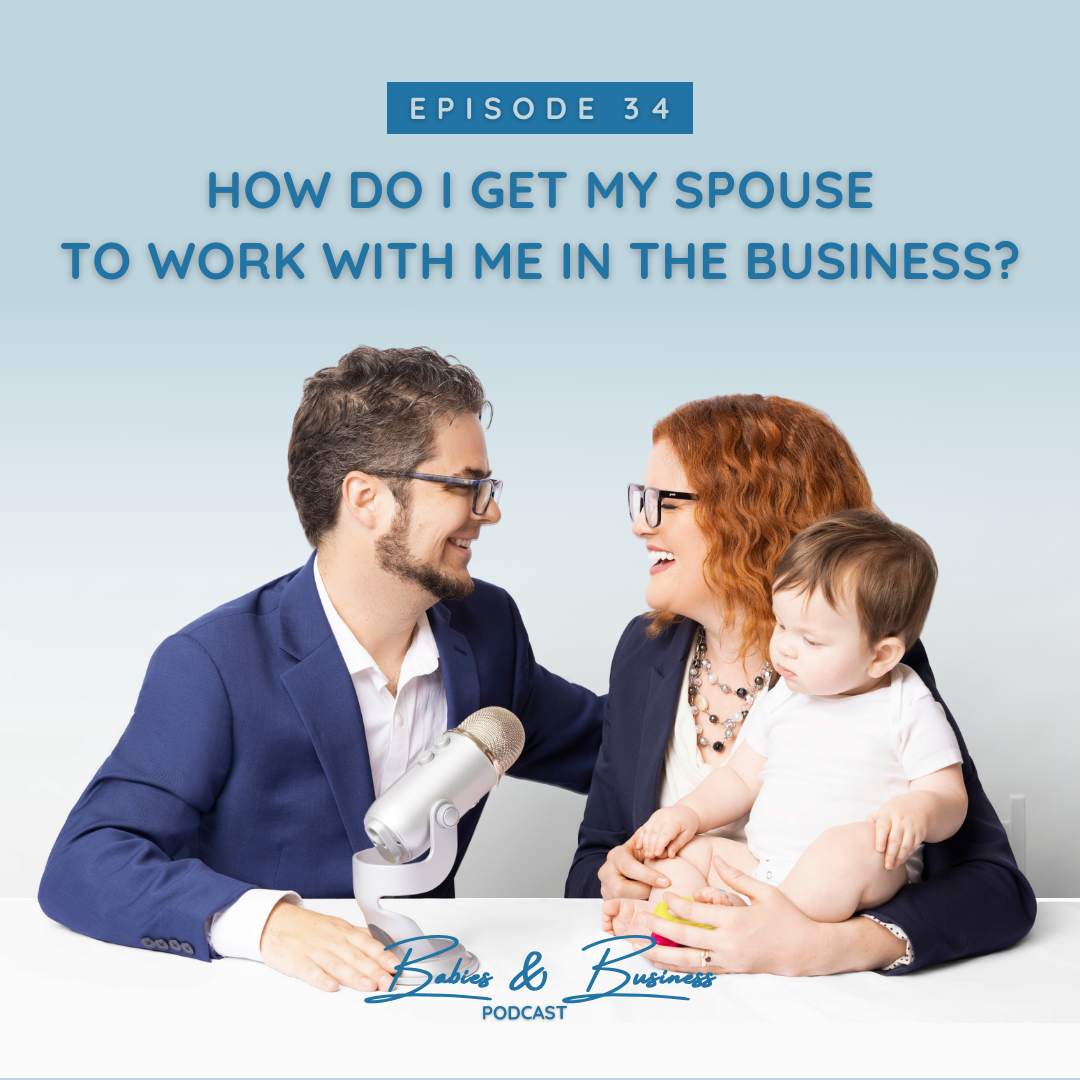
In this episode of the Babies in Business podcast, hosts Avram & Rachel Gonzales explore the journey and dynamics of working together as a married couple. They share their personal story of transitioning from running separate businesses to co-managing Digital Harvest. The couple discusses the importance of a spouse wanting to work together organically, rather than being persuaded, highlighting the critical factors that made their collaboration successful – compatibility, interests, and skill sets. They further delve into the importance of having the right roles, clearly defined roles, and autonomy within the business structure to ensure both personal and professional growth. The episode wraps up with advice for couples considering similar pathways, emphasizing the non-tactical but crucial decisions that need to be made to work effectively with your spouse.
Show notes:
[01:41] How Avram & Rachel came together after running two separate businesses
[07:05] What Rachel said to Avram to convince him that it was the right move to work together
[08:24] How does the partnership look on paper? A simple checklist for success
[20:26] Three factors that most impact your success in working with your spouse
[tcb-script src=”https://play.pod.co/embed/frame-v1.js”][/tcb-script]Mentions & Resources
Entrepreneur Operating System (EOS)
The E-Myth by Michael Gerber (Book)
Profit First by Mike Mikalowicz (Book)
Episode Transcription
Below you will find a transcript of this entire podcast episode. Enjoy!
Avram Gonzales: How did I get my spouse to work with me? That’s the question of the day, Avram Gonzales here at the Babies and Business Podcast. Rachel, you know the real secret though, don’t you?
Rachel Gonzales: I do.
Avram Gonzales: Yeah, there’s a story behind it. We are a couple that when we first started out together in our relationship, we had separate businesses.
Rachel Gonzales: Yep.
Avram Gonzales: Today is the story and some great tips and I think supportive resources for you if you’re interested in having your spouse come work with you.
Rachel Gonzales: For sure.
Avram Gonzales: Because that’s a big decision.
Rachel Gonzales: Yeah, big decision, but also, you know, a lot of the people that want their spouse to come and work with them see the benefits of them working with them.
So many benefits. And, uh, yeah, we’re just going to delve right into that because, that’s our story.
Avram Gonzales: And there’s a lot to this story. The nuance is really important today. We’re gonna start with a story, then we’re gonna talk a little bit about why it’s worked for us working together since 2000 and, and of 2020.
Yep. All right, it started in Scottsdale, Arizona. We’re gonna talk about that in a moment, and then we’re gonna wrap up with three keys that have allowed it to work so well since that time. So we’ve got a mix of stories and some real implementable action steps for those of you who want to figure out how to get your spouse to work with you.
So was I able to and can you get your spouse to work with you? No, the answer is No. And the reason is they have to want themselves to work with you.
Rachel Gonzales: Sure.
Avram Gonzales: And so That’s where our story started. Rachel owned an alterations business.
Rachel Gonzales: That you helped me start.
Avram Gonzales: That I helped you start. I was running Digital Harvest solo at the time with like a virtual assistant and, or two. And we were working separate. So you had your office on the other side of the house.
Rachel Gonzales: Yep.
Avram Gonzales: On any given morning I could hear that, that sewing machine just going like a blur.
Rachel Gonzales: Yep.
Avram Gonzales: And I remember on many occasions seeing how detailed and organized Rachel was and just like she’s the gal that if you tell her about something that she could do, she’s going to do it right now. She’s not going to do it after the other things that are in her list like she gets this wild hair and she’s just she’s that person
Rachel Gonzales: And that’s why you have to be careful with me because if you say yes to something, you know, it’s going to happen right now.
Avram Gonzales: It’s going to happen right now. And so just that thing alone that that spirit that she had made me think of the opportunity of what it would be like to have her at Digital Harvest.
Rachel Gonzales: Yeah.
Avram Gonzales: But I never mentioned it and never brought it up never entertained that because I believed so much in her dream.
Rachel Gonzales: Correct. Yeah. So we were gifted this, uh, this trip to Scottsdale, Arizona. It was shortly after we got married. So we got married in October and we went in December to Scottsdale and we went to this resort that was just beyond my imagination of what was possible for someone to do regularly.
So you have this cousin that gifted us this and they go every year.
Avram Gonzales: Shout out to Greg and Kim Gonzales. Thanks guys.
Rachel Gonzales: Yeah, you really, really did. It is so. What happened for me there was just so transformational in just me for me just as a person in general I grew up with ten siblings. We didn’t have money for really anything There, I could go into a whole lot of things there, but, um, it just shifted my viewpoint of what was possible to say it in the smallest way.
So I was there and my plan was since March, since the shutdown in 2020, I wasn’t really able to function in my business. My plan was to kind of jumpstart my business. How, how would I do this? How would I make it like, have a resurrection or something. And, you know, it, it didn’t take long. I think we weren’t there a day.
And I had said something. I, I just saw myself in your business. And I thought, gosh, I’ve been mourning the loss of my business since March. Avram’s been kind of in denial because he doesn’t really know how much it affects maybe. And then I just, I just really saw how I could benefit your business. I wa
s seeing that you were also doing some stuff.
You had lost a lot of clients because of cleaning clients.
Avram Gonzales: Yeah. They were house cleaning businesses that were in trouble.
Rachel Gonzales: Yeah. They couldn’t even go into those homes and actually render the service. So they couldn’t pay for the marketing that you were doing for them. So you were struggling and I came in and I was like, gosh, I’ve got great plans.
I could, I could help you so much. So we were out on a hike one day there in Arizona, and I said, Hey, you know, I think I want to shut down my business, and you’re like, Yeah, we could shut down your Google business listing temporarily. I was like, Yeah, yeah, let’s do that. And in my head, I was like, Yeah, I gotta ease this guy in because he helped me start this business.
He helped me get it, like, on the internet map.
Avram Gonzales: There was like one morning that she went and she was still working a part time job getting the business going and I was in my boxers for four hours with the TV on in the background doing something and I built her website when she was at work.
Rachel Gonzales: Yes!
Avram Gonzales: You know, like that’s how it all started.
Rachel Gonzales: Yeah, so you were building into my business and my dream. And so that day passes and Avram was like, yeah, okay, cool. We’ll, we’ll just shut down temporarily. And then the next day we had gone on another hike because Scottsdale is great like that. You can go pretty much anywhere, anytime.
Avram Gonzales: It was beautiful there in December. It was great.
Rachel Gonzales: It was so great. The weather was wonderful. So we were on this hike again and I said, so, you know, I don’t want to shut down my business temporarily. I just really want to shut it down. And I want to come work with you. And then I started proposing what I could bring to the business. And I didn’t really have to work very hard.
But, here’s the thing. Avram never let on that he would welcome me in the business. So I was kind of putting myself out there. But that’s kind of the, uh the story of our marriage and courtship. Okay. Me putting myself out there, him putting himself out there and just hoping that the other person catches what we’re saying and takes it.
So, I told you I wanted to join your business and that’s when you revealed to me, oh my gosh. After you were very, very sad and you didn’t, you didn’t want me to lose my dream and that was owning my own business. And I just reassured you that I got my hobby back. I don’t have to work with clients. I don’t have to scrape for the scraps that you get with being a, an alterations person.
People don’t want to pay what it actually takes like the time and energy and the effort and this craft that goes into it. So I proposed to you that I come and work with you and then you got to explain to me. You had wanted me in your business for a long, long time. So, that was such a great way to be received in putting myself out there and saying, I wanted this.
Avram Gonzales: Yeah, and that was the important thing, is that she came to it, and she also knew that she had something to offer.
Rachel Gonzales: Yeah.
Avram Gonzales: Like, we’ve talked to couples before, and it’s like, well, you want your husband or your wife in it, but, like, what are they bringing to the table? And that’s a real question. You know, you love them maybe they’re dependable, but that’s it. But do they have any skill sets? Do they have, you know, are you guys actually compatible? I think that’s one of the big things, and maybe we talk about that now. I think it comes down to three different reasons why it worked, and then we’re gonna talk about three things you gotta have in place in order for it to work long term.
Rachel Gonzales: For sure.
Avram Gonzales: Um, and those are compatibility, interests, and skill sets. Our compatibility was good. From the beginning we figured that out because we did so many things that had nothing to do with business together.
Rachel Gonzales: Like on the personal side, you know, I love the the money side. I love to keep track of our budget and household stuff and take off all of the like calls around that.
You were just so happy to hand that over to me because you just don’t love that stuff. But I, I feel like I’m a kid in a candy store when I do stuff like that.
Avram Gonzales: So she’s the fast action taker. I’m the one that’s gonna think about it. There’s so many things that we are just very opposite on. And I think that’s where compatibility comes in.
I ran in business with somebody else. I won’t say I did the business together with them. It’s not totally true in the past, but we were so much the same character.
Rachel Gonzales: Yeah.
Avram Gonzales: Like we were both the hero, you know, there’s not room for like two heroes in a well defined story.
Rachel Gonzales: Well, I’ll be your, what is it? Robin’s your Batman.
Avram Gonzales: Yeah, exactly.
Rachel Gonzales: Yeah.
Avram Gonzales: That’s so funny. There’s um, there’s a, there’s a, Oh man, that’s great, Rachel. There’s, there’s a framework in the entrepreneurship world that’s called entrepreneur operating system EOS. Rachel’s going to collect yourself right now. Um, because she’s seeing how, how red my face got.
Rachel Gonzales: You did blush for some reason,
Avram Gonzales: I don’t know why I like that, nevermind, I was going to say. No, I just won’t go there. Alright, so, with the EOS, there’s two types of people that are defined the visionary and the integrator. So that’s, that’s the Batman and Robin business world. The visionaries ones got all the ideas. They’re probably like ADD, ADHD on some level. They have, they have no sense of self control or reigning it in.
Rachel Gonzales: Sure.
Avram Gonzales: You know, and then the integrators, the one that just actually makes the stuff happen is like, can we just stop talking about it and go?
Rachel Gonzales: Yeah, sure.
Avram Gonzales: So from a compatibility perspective, we’ve always been like that.
Rachel Gonzales: Well, and I, I just think that. Like that’s my personality. I love to, I will support this person. You are the visionary. I can support you with actually helping your dreams and your visions come true. So I get to validate what you’re saying maybe put it on a list and we’ll get to it. Maybe it’s a really great idea or we just say no now’s the time we do that. So,
Avram Gonzales: yeah,
Rachel Gonzales: you know.
Avram Gonzales: With me and my ex it was like just tons of ideas and then just nobody did anything.
Rachel Gonzales: And then you get a little bit demotivated
Avram Gonzales: demotivated
Rachel Gonzales: You just can’t get anything done.
So yeah, that’s one of the things is We were really, really compatible and there was a test that we took the Clifton StrengthFinder test.
Avram Gonzales: You will love this. I think you need to take a test that’s this or something like that.
Rachel Gonzales: We paid $50 and it was so, so worth it. It actually changed our personal relationship.
Not that we were struggling. By no means were we struggling. What it did was it just gave me the ability and the permission kind of to celebrate your strengths. While being aware of your weaknesses.
Avram Gonzales
: Yeah.
Rachel Gonzales: And vice versa. But also, not getting mad at the fact that you weren’t the same as me. Why? I don’t want you to be the same as me.
Why would we want someone to be the same as we are? We can’t really realistically expect that. But I just get to look at you and, you know, we get to joke and laugh that you’re not the same as me. And it’s okay. And there’s no judgment around it.
Avram Gonzales: Yeah, and that was a game changer because I think we have a lot of even to ourselves hidden expectations of how somebody else should show up. But when you see it written out clear as day with something like the Clifton StrengthsFinder You do have to giggle and then catch yourself being like why would I ever expect her to be like that?
When she that is just not her then it’s silly and it’s like well, maybe they’re in the wrong role. Maybe we got to adjust things or maybe i’m just expecting too much of somebody. All of that came in perspective with that Clifton StrengthsFinder.
Rachel Gonzales: Yeah, and that, that StrengthsFinder really showed us, we already knew we were opposites.
We would tease that we were opposites. But it truly showed us in black and white, and there is color on that form, how truly opposite we were. Where I am someone that loves lists, I love order, and I love dependability and things like that. And I love to build into people and relationships and things like that.
I found my greatest strength by answering all those questions that went into that test. But also I just love that I’m able to celebrate and really put words to all the things that I love about you. And it’s not about what you don’t do. It’s not about your weaknesses. Your weaknesses. I am so grateful that I get to fill that role because I love the things that you don’t. And vice versa. So it’s truly a match that’s perfect.
Avram Gonzales: Yeah, there’s a couple others out there I’m not sure the names, but we just found success with this one and
Rachel Gonzales: I just recommend this.
Avram Gonzales: It was it was
Rachel Gonzales: don’t go anywhere else
Avram Gonzales: Yeah, so that’s the compatibility piece We also want to talk about the interests and the skill sets these being the the three reasons I think why it works really well and has worked With interests, I think it’s important that your spouse be inclined to something.
You can have some of the same inclinations, some overlap, but I think they do need to be different.
Rachel Gonzales: Absolutely. And you know, for me, my inclination was, I just love money. I love dealing with the money. I love the budget. I love the, I love the detail of it. I, I am the person that when, when I actually look at my bank account and my software that I use to keep track of our budget, it better be on to the penny.
And if it’s not, I will find that penny.
Avram Gonzales: She’ll get up out of bed at like 10:30 and I’m like, what are you doing? It just didn’t balance.
Rachel Gonzales: And it sounds silly, but that’s me. And, and that’s my inclination. And it has served well in our business. And I’m really disciplined. Like I do things right now. I do not wait.
I just, if I’m waiting, there’s, there’s something going on. I’m like lack of babysitting. Something like that. So I just really, really enjoy that stuff and that’s where I am inclined. Um, I grew up with nothing and I grew up with the expectation of never having anything. I also got married, I was married for eight years and even though we had zero money, really, it felt like no money for anything.
I single handedly made it possible to buy a house. And I have owned two houses in my life. And that’s something that I never thought I would do. And that’s because of my, um, discipline with money and my willingness to make small sacrifices now for later.
Avram Gonzales: And you weren’t schooled in that.
You don’t have a background in that, but you were inclined to that. And that’s, that’s the point about these interests, these things that, that people can’t stop thinking about and obsessing about regardless of their education or their background.
Rachel Gonzales: Absolutely.
Avram Gonzales: You know, for me, it was like growing up my mom really nurtured in me this artistic side and this creative side.
And while I didn’t continue to create art, I started looking at the world with more creativity and how I would solve problems and be a creative problem solver. And I, I have a love for games, right? So these different things map out really well to the roles and things that I serve in the business. Things that you just mentioned roll right into the roles that that you have and guess what again?
They’re they’re different.
Rachel Gonzales: Right? They do not overlap.
Avram Gonzales: They do not overlap. So that’s I think all I have to share about the interest side. The last piece is your skill sets?
Rachel Gonzales: Yeah.
Avram Gonzales: So it could be similar and related to those interests, but like for me as an example, I’ve learned tons of different types of marketing.
Rachel Gonzales: Sure.
Avram Gonzales: I’m not married or in love with any one particular.
Rachel Gonzales: Sure.
Avram Gonzales: You know, but I have these skillsets that I can apply for our business and for our clients. I bring that to the team, right?
Rachel Gonzales: Yeah.

Avram Gonzales: I am not great at website stuff, but I know enough. That if we’re in a pinch, I can do things, right? So I bring these skill sets to the table.
Sure. Your spouse has to bring some skill sets to the table. Like here’s the deal. If your spouse can’t work Microsoft word and Microsoft, you know, any of those products, you think they’re going to struggle helping you out with some admin stuff?
Rachel Gonzales: Yeah.
Avram Gonzales: You know?
Rachel Gonzales: Yeah, for sure.
Avram Gonzales: That’s a big deal. There’s other skill sets that could be more complex, some more simple, but if you don’t have them, how, how are you going to be of benefit to the team.
Rachel Gonzales: Yeah. Well, and for me, my skillset really came from, um, just teaching myself because I didn’t go to any kind of schooling. I didn’t go to any kind of college or anything like that. Um, I was not, um, put into any kind of education when I was younger. So, everything that I have just came from my interests and my inclinations.
It kind of was born from that and then I just, um, I love to learn. So if I have an interest, I’m going to find a way to learn.
Avram Gonzal
es: Another skill set you’re sleeping on, I think, Rachel, is the experience that you gained as a missionary in the LDS church.
Rachel Gonzales: Sure.
Avram Gonzales: Long time ago. Right. So Rachel serves as client happiness officer right now for our business, which means she’s the one that’s, that’s face to face with all of our clients.
You know, and building those relationships because she was out there building relationships with strangers. She’s good at relating to people.
Rachel Gonzales: Sure.
Avram Gonzales: Right. So bringing those skill sets into what we do.
Rachel Gonzales: Yeah. So it was life skills that I learned, um, things that I had gone through. It wasn’t through any kind of formal education.
So yeah, I mean, I feel like I have a lot to bring to our team. And I know that if you give your spouse the room to actually maybe propose or proposition you to join your business if that is an opportunity that comes about. That’s, that’s going to be how it’s going to happen because they see what they could bring to the business and it can work for you.
And that’s just how it happened for us. It was organic. It wasn’t planned.
Avram Gonzales: It really wasn’t. It’s just that now we have the ability to look back and see what has worked. We’ve talked to enough couples now that are in business together, raising families together, that we, we hear the things that have worked well, the things that have not worked well.
And we’re like, wow, I feel like we got kind of lucky because of our ignorance at the time and not knowing some of the tools that we know. And now we like, we realize it just, it just has worked out. So why it worked, compatibility, interests, skill sets, we all brought something to the table. We both did.
Rachel propositioned me, wasn’t the other way around and wasn’t me trying to convince her.
Rachel Gonzales: Right.
Avram Gonzales: Okay. Now we’d like to share with you the three most important things that we can and how to have success working with your spouse.
Rachel Gonzales: Yeah.
Avram Gonzales: I think these three things trump everything. Nothing else matters. You know, people have asked us, do you guys have some rules of the road that you, that you have in place and like communication techniques or what you do and don’t do.
And, you know, I think we have some unwritten ones and we’re going to have to unpack that.
Rachel Gonzales: I just think it’s our relationship too. I just think how we communicate, it comes into our business and it works for us.
Avram Gonzales: Yeah. People want all the tactics. The three things that we’re going to share with you are less tactical and they’re more like big decisions that that are made.
That you, you can’t go back from.
Rachel Gonzales: Yeah, they’re made and kind of not set in stone, but they’re set and there’s a reason why they’re set.
Avram Gonzales: So let’s talk about them. Um, these three reasons. The first one is about the right roles.
Rachel Gonzales: Yes.
Avram Gonzales: So we were laughing earlier about somebody taking a role that was administrative.
If they couldn’t even work a spreadsheet, right, that’s a funny joke that makes sense but oftentimes when we bring our spouse into the business, sometimes they’re filling roles that do not work for them.
Rachel Gonzales: Yeah. And it’s, it’s kind of like, I need help here. Can you help me here? It’s kind of like that. It’s not strategic.
It’s not thought out. And that person is either going to get burnt out or frustrated or mad at you.
Avram Gonzales: Yes. Cause it’s a mismatch. And then there’s this weird tension that will build in the business. So we’ve had that with when we’ve had to cover roles for a team member that maybe didn’t work out. Um, right.
And you realize that, wow, they are, they are batting cleanup right now. They’re doing their best to fill this position, but this is not the right one. Like now we’re getting frustrated with each other.
Rachel Gonzales: Right, exactly. So the proper expectations around that too, you know, the right roles, like, what is the right role?
Clifton StrengthFinder helped us find that and really like know what was good for each other and in my case, I didn’t even know all of the things that I was good at at that time
Avram Gonzales: Yeah, so I think if you have some idea of what your organization chart will be as you grow into it, then you can look at what the different jobs are and you can look at that chart I mean we pulled this out of the E-Myth from Michael Gerber. You make an organizational chart with the different roles and jobs that somebody would have.
Rachel Gonzales: Right.
Avram Gonzales: And then you put your name on the circles that have the roles that you’re filling right now.
Rachel Gonzales: Yeah, until you fill someone
Avram Gonzales: until somebody else picks up that role now, here’s the deal Here’s where it goes from the right roles, making sure that you’re only doing things that you’re good at and that you’re inclined to.
Rachel Gonzales: Right.
Avram Gonzales: Those fill you up, right? The second piece we want to talk about are clearly defined roles.
Rachel Gonzales: Yeah.
Avram Gonzales: Okay, so first was the right roles, now clearly defined roles. If you have This chart that you could envision in front of you. What do you think is going to happen if both of your names are on some of the circles?

Rachel Gonzales: Well, I know for me if you were also in the bank account all the time and you were giving me advice and you were telling Me these things i’d actually back off and i’d be like, okay you do it because I don’t think that’s fair I just don’t, I mean, I think that it’s more work than necessary. And why are you doing it if I’m perfectly capable?
So it’s really, really important to have that clearly defined, like those boundaries of this is my role and there’s trust involved. So if you can trust that person, sometimes people can’t even trust their marketing company to do the marketing for their business, let alone their spouse to do this one part, one or many parts.
Avram Gonzales: Yeah. Or the, you know, the agreement is like, let’s say it was even more simple. Let’s say that you were only managing the finances of the business finances and billing.
Rachel Gonzales: Yeah.
Avram Gonzales: Um, if I started asking you to do things that are outs
ide of that,
Rachel Gonzales: Sure.
Avram Gonzales: Well, then the role’s not clearly defined anymore.
Rachel Gonzales: Correct.
Avram Gonzales: Right? The agreement’s a little bit different.
Rachel Gonzales: Correct. And then it’s kind of like, okay, well, what does done look like? You know, that’s where the question could come. Okay, so is this temporary? Am I just filling in for a little while? Or that kind of thing.
Avram Gonzales: Yeah.
And I think it’s, the thing is, is I think it’s easy to slip into that.
Rachel Gonzales: Yes.
Avram Gonzales: When you’re in a relationship and doing business together.
Rachel Gonzales: As, well, also because it’s like, you want to help the other person out. Maybe, maybe I want to help you out. I see you’re stressed. Hey, how could I help you out? And then you’re like, well, I’ve got this thing to do. And I volunteer to do it. And I’m like, oh, this is bad.
This is, this is not for me. Being willing to actually say that and not take that role on is important.
Avram Gonzales: Yeah, I think that’s why this was such a hot topic that we brought up on Facebook like, couple of weeks ago, maybe a month ago now. Um, it’s just because it’s not always black and white and it gets so blurred when you’re in business and in relationship together.
I think this clearly defined roles, you already touched on it. The third thing is the autonomy. So if you don’t trust your partner to take care of it, you’re done.
Rachel Gonzales: Yeah.
Avram Gonzales: And that means that you’re not like checking up on them. Like you would an employee.
Rachel Gonzales: Correct.
Avram Gonzales: Cause they’re not.
Rachel Gonzales: Correct. Like for me, when I’m doing this stuff, like I’ll balance the books or I will just make the transfers cause we do Profit First Accounting.
I will have just made the transfers and I’ll say, Hey, Avram, you’ve got to see these accounts. This is pretty cool. Yeah. And I’ll show you the amount and you see, Oh my gosh, wow, our OpEx is really, really beefy right now or whatever that is. But I’m not showing it to you because I think that you need me to account to you.
I’m more like, wow, look at us, you know, so it can feel like a team. If you don’t feel like a team and you feel more like an employee, like if you’re working together as a spouse, with your spouse and you feel like you’re being watched and not trusted, well it’s probably because you’re not trusted and you need to have those conversations because you will not be able to function in the long term and it will cause problems in your relationships.
Avram Gonzales: Absolutely.
Rachel Gonzales: If you can’t have these open conversations, And have these things clearly defined and have that trust. That trust element is crucial.
Avram Gonzales: And these are the three most important things. I told you they wouldn’t be tactical.
Rachel Gonzales: Yeah.
Avram Gonzales: You know, you might call them more, more theory, but they’re the, they’re the important decisions that need to be made up front.
And a decision includes your contract, your, your personal contract that you have with your spouse, your partner, who’s working with you in the business. Whether, if it’s not written down, it’s unspoken, but it’s, it’s still there.
Rachel Gonzales: Right. And it’s just, if this is you wanting to have your spouse join you, it’ll take time.
Maybe it will, maybe it won’t happen. Who knows.
Avram Gonzales: They gotta come around to it on their own.
Rachel Gonzales: Correct.
Avram Gonzales: That’s the only way you can be sure that the motivation is in the right place.
Rachel Gonzales: For sure. And then with these things, you know, the right role, clearly defined roles, and the autonomy.
This is you doing the hard work. The hard work of figuring out where, what do you need to be doing? What do they need to be doing? What are they interested in? What fills them up? What feeds them? If their job doesn’t fill them up and feed them, you are not going to have longevity with this. So it is your job to figure out what are those right roles. How do you clearly define them and how do you give each other autonomy?
That is not something that someone else like us from the outside could even begin to suggest to you because it is so personalized to your business, to you, to your relationship, all of those things. So it does take a lot of work and we’ve gone through a number of different, um, different things that have helped us with this, like Clockwork helped us with a lot of the foundational stuff around our business.
Clifton StrengthFinder has helped us to figure out more about who we are. There’s, oh, goodness, the E-Myth we mentioned. So there’s a lot of different things that you can learn about, like structures and things, and how things can look, and then see yourself in those structures, and then tweak it for what your business and your life looks like.
Avram Gonzales: Yeah, wow. Powerful episode. How do I get my spouse to work with me? Well, you don’t get them to work with you.
Rachel Gonzales: Nope.
Avram Gonzales: They come to you. And you got to pray a little bit that it’s the right match or that you can set it up in such a way that you can both thrive and be successful.
Rachel Gonzales: Yeah. Yep.
Avram Gonzales: Yep. So with that, we appreciate you listening in.
We would love to hear some of your feedback. Are you working with your spouse? Do you have some other things that you would throw here in the hat about success tips that have allowed you to have a long term working relationship with your spouse and just have all the things? We would love to hear about it.
Find us on social media @babiesandbizpod. You can email us at hello@babiesandbiz.com. Last and final request before we go to the next episode Please please please get on Apple Podcasts and leave us that five star review as well as some nice words that go along with what you’re getting out of the podcast.
People read those reviews and make that decision to tune in or to keep scrolling. And we’d really appreciate your support in sharing us with the world. With that said, we appreciate you again. Bye for now.
Rachel Gonzales: Bye for now.