Episode 106: Embracing Change: How to Move Forward with Courage
 Have you ever felt frustrated without knowing why? That feeling can build until you finally realize what’s wrong. Even then, you might ignore the solution because you’re scared of change or just don’t want to deal with it.
In this episode of the Babies and Business Podcast, hosts Avram and Rachel share what it was like to move homes after nine years. With two kids and a growing family business, their old house just wasn’t working anymore. This move was about more than finding a new space; it was about embracing change, facing fears around money, and letting go of what felt safe to make room for what’s next.
Show Notes
Key Highlights from this Episode:
- Avram talks about feeling frustrated and stuck before realizing the need to embrace change
- Rachel shares the emotional breaking point that made her finally ready to move forward
- Avram and Rachel reflect on outgrowing their old home after nine years
- They discuss how small daily frustrations were signs that something needed to shift
- Avram opens up about his fears around money and leaving the familiar behind
- Rachel explains how “waiting it out” was actually keeping them from growth
- They talk about how embracing change created space for personal and business transformation
- Avram shares how new opportunities appeared right after they made the move
- Rachel talks about how a bigger home brought clarity, calm, and new energy
- Together, Avram and Rachel remind listeners that growth starts with discomfort and the courage to take the next step
Mentions & Resources
Profit First by Mike Michalowicz – A cash management system that flips traditional accounting on its head by prioritizing profit. Instead of focusing on revenue minus expenses, the Profit First method helps business owners ensure profitability by allocating income into separate
Episode Transcription
Avram: Got some thoughts for you today, things that will enrich your relationships and also find the fruits to those relationships that you’ve been putting some energy into.
Rachel: Yeah.
Avram: I think that it’s a pretty easy tendency to just kind of walk through life and not realize the power that some of your relationships hold that perhaps there’s more that’s possible with them. And sometimes I know my experience, as an entrepreneur, starting a new family, trying to do it all, it can feel pretty isolating and that there’s a lot of times when you think that maybe people don’t care and so then you just don’t reach out
Rachel: Yeah.
Avram: and you don’t say something.
We had this experience, Rachel and I in Texas. We went to this event called Ecstasis. You’ve heard us talk about Genesis. We’ll plug that in the show notes. You can go check that out. We went on this journey of transformation and we found this lesson out in the woods on the Imperian Ranch that we wanted to bring back and share with you.
It’s also something that we’ve reflected on. And found a lot of power in. So let’s set the stage for you, what we experienced, and then what’s showing up now. And I think you’ll reflect and see this possibility now in your life. So what was, what? What, what did they call it? What did we go out there and do?
Rachel: Yeah, so they called it the Hy-Vee. This is a, a buddy, exercise. And basically what it is, is you’re up in the air and you have these, tight ropes or tight wires that you’re standing on. Of course, you have all this harnessing on to keep you safe, but you’re here with a buddy and you’re, what you’re doing is you want to get into the plank position and you’re putting your hands together.
You’re touching each other’s hands, and then your feet are on these wires.
Avram: And the wires get further and further apart. As you walk out together.
Rachel: So it creates a triangle. So if you think of a triangle, it’s a pretty wide triangle. It starts out small at the point at the top, and then it goes to those two sides that are pretty far out. And what you’re doing is you’re leaning into your partner and that is the way you won’t fall, is leaning in and then walking further and further out towards the other end of the triangle.
Avram: There is nothing else to hold onto.
 Rachel: Correct. It’s only you, you know, you have the safety stuff on, you have a harness and all these things, but yeah. So that was the exercise. So what is it that we’re doing? We’re leaning in. If you lean in and your partner doesn’t lean in, well then it becomes very unstable and you can fall because you’re not actually creating the tension that you need to move forward.
Which I think is really interesting because oftentimes we shy away from challenge and tension. But that’s exactly what we need to grow and move forward in this exercise anyway.
Avram: Yeah. It is a perfect metaphor for relationship because it becomes so obvious when your partner is not trusting
Rachel: Yes.
Avram: the process, you might think that they’re not trusting you.
Rachel: Correct. And you can get in your head about it. And you can start leaning away and you can get frustrated or take offense or distance. There can be a lot of things that come from that from your perception of them not leaning in. You can also have a perception of, well, I’m giving a hundred, why aren’t you giving a hundred?
Or maybe I’m giving 50. Maybe your viewpoint on a relationship is I give 50. You give 50, we get a hundred, you know.
Avram: Yep. You had a, a takeaway from your experience.
Rachel: I sure did.
Avram: What was that?
Rachel: Yeah. So I found myself leaning in and I found that this was not a challenging exercise for me, but it did have a beautiful lesson that I came away with, and that was that I lean in and I am really communicative. I let my partner know, I need you right now, and I’m here for you.
Basically giving her the confidence that she could lean into me because I was there and that she was doing a great job. And then I found myself, at one point my shoulder was hurting a little bit, and instead of me saying, Hey, my shoulder hurts, let’s stop. I said, how do you feel? Do you feel like we’ve done it?
And she said, oh, I think, I think we, I think we can go further. And so we did. I leaned in. I never stopped leaning in. We leaned in and we went forward and then we, we called it, but I found that in relationships, I, um, I lean into the person and
Avram: Maybe, maybe defer to them a little bit.
Rachel: Sometimes, and that, you know, I asked what my partner needed and it turned out that that last step didn’t, it wasn’t bad for me, but the opposite could have been true and good as well for me to say, Hey, my shoulder’s really hurting.
Uh, you know, I’m not able to go further. I’m your partner and, and we’re, we’re in this together.
Avram: Yep.
Rachel: Uh, maybe I need a break,
Avram: Yeah.
Rachel: but in my communication, often it is me subjecting my stuff to the other person. And asking what they need instead of myself and being honest about that. So that’s what I learned there in that experience.
Avram: Yeah, we both had similar takeaways. Mine with my partner was, was similar. It was that when I asked for and was specific about what I needed, it gave him the opportunity to step up and deliver it exactly. Versus me not saying anything and hoping that he could feel, we’re getting close to falling down here.
You know, if you don’t lean in, like we’re not gonna make it. It’s like, so how often do you know I sit around and assume that it’s obvious what my partner should be doing and partner? I’m using loosely because all kinds of relationships. It’s you and somebody else.
Rachel: Yeah.
Avram: And you know, that method of operating metaphorically on the Hy-Vee, you know, I almost fell through the V because my partner was leaning back and was not pushing back and not trusting what we were doing.
And so it’s like, well how much does that happen in regular life?
Rachel: Yeah.
Avram: Right. And
Rachel: Well, and
Avram: being let down frequently.
Rachel: Yeah, well, I think also there’s something else to be learned. It’s like, so I found myself leaning in and I just kept leaning in, so I would’ve ended up making us fall if I just kept leaning in, the person kept leaning away,
Avram: sure.
Rachel: and I, I see that as a metaphor for my life. And, and where that comes in is that I lean in and I lean in all the way, and often, I just lean in.
And when it fails, I often blame myself, but I was giving it my all as opposed to recognizing that there was another equation to it. So I often am very hard on myself when I fail, and it is attached to my worthiness because yeah, because of a lot of things in my past. But I find that I, I beat myself up about failing and failure in general because I was part of the equation, but the thing that I failed to recognize is that there was someone else part of the equation. And the falling or the failure isn’t actually what I think it means. It doesn’t mean what I think it means. It doesn’t mean that I’m worthless.
Avram: It doesn’t mean that I’m unlovable or any of those things, you know, in life.
Rachel: Yeah.
But I find myself leaning in and I, I find it too interesting that we can actually be surprised by who leans in in our life, who is there to support us. And in the metaphor of leaning in, it’s the people that support us, that there’s support around us, but we don’t see it.
Avram: Sometimes it’s unacknowledged.
Rachel: Yeah. And sometimes it’s because we are not leaning into that relationship.
We’re not even aware that it could be a thing. That it could lead to business or a friendship or any of those things. We just don’t see it.
Avram: I found it very obvious. Returning back to reality.
Rachel: Yeah.
Avram: I’m part of BNI, Business Networking International, part of a group I’ve been in for several years now, and I came back to that room and realized really quickly who was leaning in with me in relationship and who was not.
Rachel: Yeah.
Avram: You know, there’s, there’s a couple people that surprised me who are newer friends, right? Uh, my friend Kenzie, my friend Julie, both newer members of this BNI group, it’s like they’re there playing fool out just like me. And very quickly we’ve come to this reciprocity and willingness to lean in, to go out of our way to help each other grow our businesses. You know, there were some sleepers that I wasn’t aware of, just how much they would be willing to do for me.
Rachel: Yeah.
Avram: You know, they, there’s been nothing that they’ve said or done that would make you think otherwise.
Rachel: Oh yeah, absolutely.
Avram: but my friends, Mike Schlichte and David Mann, these two, right. They’re sleepers. You know, I did not acknowledge how much these two really wanted to do for me. Right. And then a surprise that came recently was my friend Brooke Bailey.
She did our photography, by the way, for all the cover art stuff for Babies and Business. It’s been like almost two years since we had that photo shoot. Maybe a little bit more.
Rachel: Some of our DH stuff too
Avram: Yep. Yep. And um, so we met up for coffee the other day and it was like, wow, I cannot believe how much support this person is offering that I have only seen maybe two other times
Rachel: yeah. But it was because you were specific about asking for help.
Avram: This is also true.
Rachel: So it was in this same vein of the Hy-Vee, you had recognized that when you ask for specific help, people can give it.
She stepped up in a big way. She not only said yes to the thing that you were asking about you were talking about your workshop, and she said, yes, I would love to come and I’d like to bring a buddy.
Not only did she give you that, she also said, or she didn’t even tell you, she recorded a video to promote it. Put it on her stories. She did not have to do that, but that was majorly leaning in
Avram: Majorly leaning in, yes.
Rachel: Because we don’t really have a huge relationship with her but we can, and we see that now.
Avram: Yeah. And it’s like, so I’m sure that there are others that are there that I haven’t seen or fully acknowledged yet that, my intention is to lean in and see how people respond. Right. The, contrast I had with some other, coffee meetings and things with folks that I would, expect to lean in the way that I’ve been leaning in since coming home from Texas was also surprising. I’m like, oh I did this massive thing for you. You’re not even willing to like do this small thing for me or make any sort of commitment for me. Like, okay, I mean,
Rachel: I think you got clarity in that moment.
Avram: I got clarity in that moment.
Rachel: You had felt like your relationship was advancing that you had, you had gotten them some really great business and then in return, when you asked for reciprocity, you found that it was kind of all talk
Avram: Yeah. A lot of unwillingness.
Rachel: Yeah. Unwillingness to actually put forth this stuff. Yeah. And who knows what that person is going through.
Avram: That’s their thing.
Rachel: Maybe personal thing going on. Maybe it’s their own business. Maybe it’s, they don’t know the, the way that they’re going and their trajectory. But it was really interesting.
Avram: yeah.
Rachel: I see that clarity. And that can give you clarity of who to put your time into.
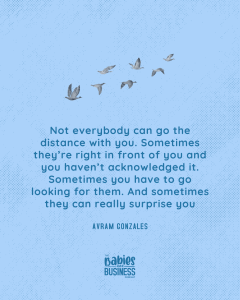 Avram: Well that’s, I think that’s kind of what, what the point is. It’s like not everybody can go up on the Hy-Vee with you and go the distance because of many reasons. It can be their stuff. It can be your stuff in regards to them. It can be all sorts of things. And so, you know, there’s only a, a number of people that you can go the distance with, and sometimes it’s they’re right in front of you and you haven’t acknowledged it.
Sometimes you have to go looking for them, and then sometimes they can just really surprise you.
Rachel: Yeah, and I think, you know, when I heard this quote, and I’ve heard it a lot, when people tell you or show you who they are, believe them. And I’ve always taken that to be on the negative side.
Avram: Yeah.
Rachel: That when they treat you poorly, don’t invest any more time in them. But in our business and in our desire to grow our business, if we’re leaning into a relationship that we want to help them grow their business, and we would like their help in return, we get real clarity on is this a relationship that will bring business for us? Is this worth fostering and, and feeding? And, I think that’s wonderful because when we get that feedback of their willingness, then we know, okay, are we okay with continuing a relationship that isn’t going to get us where we wanna go?
Or are we also okay with blessing them with where they are and moving on to someone else that could help us achieve those goals
Avram: Yeah. Yeah.
Rachel: just clarity and feedback.
Avram: And I would say like one of the additional things that’s changed for me is, you know, like you, I’ve been happy and willing to just lean in from the start.
Rachel: Yeah.
Avram: And I think that in a lot of ways I would then harbor some resentment if folks didn’t match me in that. There’s a lot of lessons for me inside of that in choosing those types of people. Right. There’s a whole, it’s like there’s a whole podcast episode there, right? But I think that that’s where true reciprocity begins. It’s our willingness to lean in first and then you know, those that are willing to lean back in and recognize the same, those are your people for this season.
Rachel: Absolutely. Absolutely. And also I love the, the, not making it mean anything. It does, it can just simply be feedback. And what is feedback? It’s just telling you it’s a signal. It could be a body feedback. It’s like, you know, my tummy hurts. Well, maybe you made something that hurts your tummy and maybe you need to take it easy.
Maybe you’re feeling really run down. Maybe going to the gym isn’t the thing that you should do. You know, pushing on to push on. Why are you trying to prove a point? Is it because you have all these shoulds running on in your head? We can make choices, informed choices and decisions based off of feedback from others or ourselves.
Avram: Yeah. It doesn’t mean anything. Doesn’t mean that they don’t like you. It doesn’t mean that they don’t want to. You know, for all you know, this person could be in the pits of despair in their life, and they just have nothing to give right now.
Rachel: Exactly. Exactly. Yep.
Avram: Simple as that.
Rachel: Yep. It doesn’t have to mean anything about you.
Avram: Yeah. And at the end of the day, you do have to go find people that are willing to lean in with you.
Rachel: Absolutely. We all need that. I mean, why do they say that babies that aren’t touched don’t thrive? Like babies that aren’t touched at all. I think they can die. They need that physical touch, and we as humans need physical interactions. So let’s find our people, find our tribe, find the people that will lean in and help us.
And those endeavors that hear our goals and say, wow, oh my gosh, could I be a part of helping you achieve that? And I want that too. I wanna help people achieve their goals. I love to support people.
Avram: Yeah. Gosh. I could go on about it. I mean, well, I’ll share, I’ll share one more thing. I’ll share. I’ll share one more thing. I’ll share one more. It’s like, I also realized that, yes, I lean in and there’s another level to it that I’ve decided to embrace, which is a deeper commitment to that partner and that partnership. Who I’ve chosen to be with.
Rachel: Yeah.
Avram: Right, and it’s like, well, if I’m not willing to go out of my way for this person, why would they be willing to do the same for me? What does it mean to be willing to go outta your way, going above and beyond the call of your like regular day, to be willing to sacrifice a part of your day for somebody else, to do something that you wouldn’t normally do in honoring of their goals and the things that they would like to achieve. That’s what I’ve internalized, coming back.
Rachel: Yeah. Well, and I think it’s really a beautiful thing when we can see the partnerships that we choose as a co-op game that we win or lose together.
And it really is that simple that we win together and we lose together. And if we’re willing to lean in and like you said, go out of our way, then in that we can both win together.
Avram: That’s good.
Rachel: Yeah, so really taking it to heart that when we choose to partner up in some way, whether it’s in business or personal life or whatever that is, that we are saying, your wins are my wins. My wins are your wins, and our losses are our losses. So let’s get, maybe let’s get better at winning or learn from our losses and see where there was support in that loss or challenge or whatever that is, you know.
Avram: So I would take this as like a, call to arms.
And I want you to think about this buddy in your life, these people that you know are in your corner and that you are in theirs. And take this podcast episode and share this with them as a means of further defining your commitment to each other.
Right. As a talking point for understanding what leaning in looks like and what leaning out looks like as an understanding of, I think I’ve shared, you know, the, the commitments that you are making to each other, the sharing of your goals and the, the specific ask of what you need and what they need from you and bringing that clarity to the table. So that’s what I want you to think about, is this episode, sharing it with them as an opportunity for you to grow closer, further, define all of these things, and then watch your relationship evolve.
Rachel: Absolutely watch your business grow, watch you be more fulfilled, feel more fulfilled, feel more connected, feel all of those things. I think you’re gonna feel more alive because I know we have, as we’ve seen these things and we’ve chosen to be aware of them. That’s all.
Avram: I love it. Thank you for listening to the Babies and Business Podcast. If you wanna go check out some of the resources things that we mentioned in this podcast, you can always, go to the show notes included in every single episode. Babiesandbiz.com/episode number, I think this is. 1 0 5, so forward slash 1 0 5, whatever the episode number is, you can find the show notes for it.
We’re always plugging the stuff that we talk about in there so that you can find them, follow up on them and learn more about it. With that, we appreciate you for listening and we’ll catch you on the next one.
Rachel: Bye for now.
Below you will find a transcript of this entire podcast episode. Enjoy!
Avram: You know the feeling where things just get frustrating and annoying, but you don’t know why, and it continues to bubble up and foam and then boil over, and then finally you realize what the problem is when you get out of it.
Rachel: Yeah. And that you had a means of getting out of it, but you, did you first have to identify it maybe to then get out of it?
Avram: Couldn’t see it just in a lot of resistance, then maybe some denial about it.
Rachel: Yes.
Avram: We recently moved, which has been a huge transition for our family. I lived in the house that we moved from just over nine years, so we moved out on Labor Day of this year, and I had landed in New Mexico on August 28th, 2016.
Rachel: Yep.
Avram: So pretty interesting that the timelines showed up like that but, a lot has happened in that time.
Rachel: Oh my gosh.
Avram: I moved here with an ex that didn’t work out. Then Rachel entered my life, and then shortly thereafter, a couple months after, moved in to that same home that by the way, my grandparents built. Right. So kind of cool, lived there, got married two years later.
And then two years after that, 2022 had our first child, Lincoln. Rachel birthed him at our home. Okay. And then two years after that, two years plus eight days. Then Rachel birthed August, our second child in the home and.
Rachel: And you make that be a big deal because you had never thought about having kids at home. And when I asked you about it, you’re like. I mean, I guess we could do it the old fashioned way and you would tell people about that. And I’m seventh in 11 and I had watched my younger siblings be born at home, so it seemed like just the way that things are done.
So anyway, side note on that.
Avram: Yeah, well, you know, the midwives tell me that about 2% of the birth in America happen at home. I was like, so
Rachel: very low,
Avram: very low, pretty rare. Uh, it wasn’t until the second child arrived that we realized any of the frustrations that we’ll kind of share a little bit about today.
Rachel: Yeah.
Avram: Where we’re going with all this, by the way, is the things in your life that you have outgrown.
The systems you have outgrown maybe the people that you have outgrown, but there may be some resistance or attachment that is holding you back, that you are logically justifying to make a change and make a step forward.
Rachel: Yeah. And I think that there are things along the way. There are these things that are giving you feedback about your life that you are denying right now. You have outgrown something, but you’re not really seeing that as a symptom of you have outgrown this thing.
Avram: We were already having issues with just the one child at home and being that we work from home you know,
Rachel: small home,
Avram: small home. We had a nanny for some time that was in the home all day, and it’s like, the noise bounces around everywhere. A toddler does not love being separated in the morning and you go to work when they’re like two years old, they will be flipping out
Rachel: Yes. And sometimes the transitions were an hour long, which may seem crazy, but that was the reality that we were living in, in this home. So it was difficult with one,
Avram: And then two, it was like
Rachel: it pushed it over the edge.
Avram: one of the crazy things that came up for me and then Rachel, I know there was like a, there was a breaking point for you that I want you to share. One of the things that was wild was that we were having a nap. The one, the, well he’s now one August. Uh, we were napping him in the master bedroom.
So this thing would happen where if I didn’t have all of my clothes picked out for the gym and for work the night before,
Rachel: And for maybe any meetings that you might have Or whatever that was like, all the stuff
Avram: Everything I could possibly need for the next day picked out the night before I would run into this issue where I would like wake up, go to the gym before the boys are awake, come back home, and guess what?
Rachel: baby’s napping.
Avram: Baby’s napping. Can’t go in the room to get my stuff.
Rachel: You couldn’t even shower.
Avram: I couldn’t even shower
Rachel: Shower and shave.
Avram: Right. If I didn’t shave the day before or the night before, then I couldn’t shave, and I’m like, oh,
Rachel: remember all your shaving stuff and put it in the guest bath and then maybe a shampoo conditioner, because at that time I didn’t have everything in there
Avram: Then it was like, you know, oh, I can’t record this video until I shave. I looked like an animal right now. You know? There was just like all these really.
Rachel: The implications that we did not even think about.
Avram: It became problems.
Rachel: Yeah. It became, massive. And so here’s the thing. If these things are happening once a month. Once every quarter, it’s not a deal. It’s not an issue. But when your baby is napping six times a day, it is happening six times a day. So, so it does feel like the room that your baby is napping in is off limits for the day, from the first nap to the last nap, depending on what your day looks like.
So we found massive things going on.
Avram: Yeah. So, you know, we’re living with that for like over a year and we had this idea like, oh, what if we buy the home that we’re in from my family? Instead of just renting it, this could be a real possibility for us. You know, maybe we do some renovations, this or that.
Rachel: It might be a whole different episode about the things that were wrong with the house in the thought of buying it for the situation that we’re in.
Avram: Uhhuh, we ended up deciding not to,
Rachel: Yeah.
Avram: and there was a moment that Rachel came to me after a very difficult day. What were some of the key points in that day?
Rachel: Yeah, so here I am. I had been looking at rentals and I was looking at options and there were, reasons why, but I just really, ugh. I realized that the problems that we were experiencing could be solved by one single decision, and that was choosing to move into a place that had more space for us.
We have two boys. I would like them in separate rooms because their napping schedule is completely different, and if they sleep in the same room, they wake each other up. If you know, you know. We also have a business and we need to be able to have that be a separate room instead of a baby sleeping in there at night because there are times when we want to take an evening meeting because we have team that is are all over the world, all sorts of implications. So this day comes along, this is the day that I’m going to tell Avram, yes, I do want to move out. I have the place designated where we want to land, that’s my decision. I would like your buy-in to, to move. I was nauseous that entire day. I felt like I was going to vomit from the moment I woke up and well, because I knew that this was a big deal. We had been living small for the last five years, seven years actually since living together and choosing to not move up forward and on to something different and better and new that would work for us. So I was choosing to move a lot of energy with this decision and I, so here’s this thing. You know, I feel nauseous this whole day and I’m trying to work up the courage. It’s about 4:30 in the evening, and I am losing my courage fast. I’m tired. I have the boys with me. I think that was not a school day.
It could have been maybe a holiday. Regardless, it’s time for August to nap. We’d had the foresight for you to move the bed out of the office and you had taken a meeting or no, you were recording
Avram: I was recording videos. Yep.
Rachel: You were recording a ton of videos. The noise in the house had caused you to actually have to re-record three of the videos.
Lincoln was still napping when it was time for August to go down. I had had planned to nap him in Lincoln’s room. Once he had woken from this nap, he had not woken. I was getting agitated, frustrated. I’d had the bed, put it into the, master bedroom, napped August in there. It wasn’t ideal.
Avram: Now you’re locked outta the master bedroom.
Rachel: Now I’m locked outta the master bedroom. There are things that I can’t do, things that I had planned to do, and I’m super frustrated. And in that moment when I’m putting August down, instead of seeing the blessing that my toddler is still sleeping at 4:30, I’m seeing the challenge that I need to nap my 1-year-old at 4:30.
So I’m, I’m feeling all of this stuff coming up and I see in that moment. Oh, this is exactly why we need to move because Avram is being prohibited from working and doing the things that he needs to do. He lost time by having to scrap those videos
Avram: you guys were ended up in the, bathroom right adjacent to the, office for like 15 minutes because Lincoln’s taking a dump and he will not get off of the toilet.
Rachel: It’s true,
Avram: And then
Rachel: and he’s very loud.
Avram: then August is coming in right. And pestering him. And now
Rachel: zuna. I had to put Zuna outside back door because the Mormon missionaries knocked on the door. I have two babies sleeping. I open the door,
Avram: Dog goes off,
Rachel: dog goes off. I have to put her outside. I go out and talk to the missionaries.
I’m trying to tell them with all the words that I have. It’s not a good day. It’s not a good time, and I am definitely not interested. And I ended up crying and that was my day, and I chose that evening to tell you that we needed to move because of all these things that came up. This confirmation of all these things going on.
This is why we need to move. Number one reason, I would like for you to be able to let your brilliance shine in business at any hour of the day. And this house that I had already picked out, and I’m pretty sure at this time you had not visited. It was that following Monday that we would go together.
’cause I had found this place that I really, really liked. There was a bedroom where there was a room upstairs, three bedrooms upstairs, and one was separated from the others on the opposite side of the house. So carpet, it would be very good soundproofing and you would be able to work at any time. I knew that in this situation we would be able to grow our business just merely based off of the fact that you would be able to put in more time and you would not have to put the breaks on when the kids got home.
I would be able to take care of them, which is what I love to do when they get home from school. my workday would be done. But you would be able to continue.
Avram: Yes. Big deal.
Rachel: Huge.
Avram: Big deal. My resistance was really about the money.
Rachel: Yeah.
Avram: It was a, a, a major increase in our financial outlay. Month to month, we had been operating from fear.
Fear being scared because I owe some back taxes from years ago in my first business that, been on a payment plan for a long time, did not want to make more money, like subconsciously did not wanna make more money so that they could then assess
and take more money.
or, you know, just like living scared. And so the thought of increasing our income, taking in more money from the business, which, which by the way has been growing and growing and growing for years.
There was just a lot of fear around that. And then also in increasing, two and a half fold our, our
Rachel: Outlay for rent.
Avram: outlay for rent, you know, and then like looking at a first month and last month.
And then looking at paying an extra month in the place that we were, you know, we’re talking about just like $8,000, $9,000 in rent for one month to do all these things. I’m basically crapping my pants and I’m like, are you sure we can do this
Rachel: Well, and then I came in with, okay, so here this is, we have this owner pay account that just keeps growing and it absolutely kills my soul. My soul is dying every single month that we don’t tap into this. And for what?
Avram: And use it like it’s just, it’s just
 Rachel: Why aren’t we using this? Why are we just sitting on this and we’re just suffering?
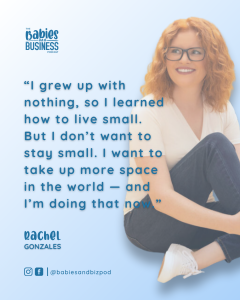
So I think that it’s really important that in all of this, that we are willing to evolve and to not be attached to the form that things are in right now. My, my form of attachment is I realized that I was attached to waiting. I am someone that would rather save, and I grew up with nothing. So I think it’s fair to say that I can live.
I have experienced it and I can make my life small enough to do so, but I don’t really want to do that. That’s not where I am in my life. I want to take up more space in the world and I am doing so. I realized that the waiting was, I felt like that was the solution, just waiting it out. Wait four more years until this whole thing blows over and all the stuff, and we’re all done with this payment plan and, and all the things.
But what I realized is that the thing that I thought was the solution, it was actually the problem for me. The fact that we were standing still and waiting was the thing that killed me the most. I love forward momentum. And we have the money to do so. So I, I actually did the math. I showed you exactly what was what.
I showed you the difference. I showed you this, I showed you the run rate. If nothing changed with our business, how long would we be able to keep going, yada, yada, yada. I told you exactly how much more we needed to make on the top line revenue for our business in order to make all of this work and it wasn’t much. If we’re really honest about it. It wasn’t much. It just felt like a lot because we’ve been sitting at the same amount in our business
Avram: for like three
Rachel: for the last three years. So the stall in our business is what we were reacting to as I was looking at it.
Avram: Well, and you and I have shared this before the podcast, every single time that we have decided to increase our living expenses. So that was when we first started doing Profit First.
Rachel: Yes.
Avram: Accounting. That was the first place that, we realized, oh, we must increase our income. We did very quickly. Like within 90 days.
Rachel: absolutely.
Avram: The second time was with our, our first born child Lincoln.
Rachel: Yep.
Avram: Again, upleveled the whole business in like 60 to 90 days, and then again with our second child, the same exact thing. We’re like thinking about, what about, you know, getting a nanny or getting them into childcare?
We were having all these considerations. We did the math. And then realize we gotta bring in this much top line revenue to bring this much into our home. Boom, it happened again. So it’s like there’s so
Rachel: we’ve seen this happen
Avram: There’s so much evidence, it’s like absurd to be caught up in so much of the resistance, but that was what I had to work through.
Rachel: Exactly. And that’s where we were. And you know, what was interesting is, so here we are, we’ve decided to move and we’re on a, we’re driving in our neighborhood, our old neighborhood. And you said, you know, oh, I’m gonna miss these paths ’cause we have some really great paths in our old neighborhood where we would walk around, walk our dog walk, we’d take walks with the boys, lots of parks nearby. And then I posed the thought, I asked, well, are we really gonna miss it? Or are we just comfortable with it because this is what we’ve known. And I think that’s a really important question to ask or something like it when we find ourselves just really comfortable where we’re at.
It’s not because we love it, it’s because it, it is what we know. So what are some of the familiar things, comfortable things that you have in your life that aren’t serving you on the path of where you wanna get to? I think that’s a really great question to ask if you feel stuck or you’re frustrated with your spouse or you find yourself not having much joy in the things that you’re doing, or there’s a lot of feedback mechanisms.
Feedback. Things that you’re getting in your life right now that something isn’t working and you can identify what that is and choose to make a difference and a change. Change things up and change is uncomfortable.
Avram: Every time. We’ll talk about it in another podcast episode. We definitely had a lot of stuff that happened when we did move.
Rachel: Yeah.
Avram: One of the highlights that I will share in the context of this conversation is that I closed a good chunk of business within a week of moving into the new house.
Rachel: Exactly, and it, they were leads that had not been in our pipeline
Avram: Yeah. there were new opportunities
Rachel: from scratch.
Avram: it’s like, you know, so we chose to move beyond the walls that we had created.
Rachel: Correct.
Avram: We expanded our reality literally and metaphorically. And then more new opportunities came in
Rachel: I think we expanded our footprint in the house by a thousand square feet. Was it, or more, more than that. So like 1100 square feet more. We have entire room extra. We have an extra bathroom, we have a tub in our children’s bathroom instead of only our master bathroom.
There are so many things that came about. Because we chose different space.
Avram: It’s just wild, you know, there’s, there’s your internal reality
Rachel: Yeah,
Avram: and there are things that we choose externally that match and validate that.
Rachel: yeah,
Avram: And like one of the signals that we’ve noticed, one of the feedback things we’ve noticed is that when our house gets crazy cluttered, you know, like laundry piles blowing up here and there.
It is a reflection of our interior state because then you’ll notice part of the cycle is like the motivation and the inspiration to just clean it all up and feeling energized by that.
Also a reflection of the headspace. So yeah, I just. I think it’s really cool that we changed the space and everything has started growing in a very short time period and.
Rachel: I also just think that it’s really fascinating that when we, so, uh, in our space, the space that we’ve moved into, it’s significantly bigger than where we were. And in the old place, I just found myself so frustrated by the thought of organizing this certain thing or the category in our house, or whatever it was.
And in this new house, I know it’s, I know it’s new and it’s, you know, kind of in the honeymoon phase of the space maybe. But I feel like I no longer need a Mary Poppins cabinet to put things in that I’m not shoving things in different places. There are multitudes of areas for my children’s clothes to go into in their room.
They have closets. In their own room. That was not the case with August. Just simple stuff like that. So it has cleared up so much for me that when I think of unloading a box, I know exactly where I’m going to put it. Because I have space to put those things away and I’m such an organized person that not having things organized is a major deal for me.
So I’m really excited about being able to, put my energy in this space and, receive that back in the form of having energy to put into other things like our business and our children.
Avram: I feel like we were living with low level insanity all the time and trying to juggle things and trying our best to make it work with that.
Rachel: We We had multiple multipurpose rooms.
Avram: Yes. I think that’s like business too. If you’ve ever had the experience of trying to make things work with a team member and it’s just not working, and then you let them go and you realize, oh, that was like the wrong peg in the wrong hole,
Rachel: yeah,
Avram: you know?
Um, you also see that sometimes with your systems and the way that you’ve been doing things. Yeah. You know, there’s like these persistent problems that keep popping up and you finally look at it. And give it some real thought and thinking like, oh,
Rachel: we’ve outgrown this.
Avram: what if we did it this way instead? And it’s like, ding, ding, ding, ding,
Rachel: Yep. then you get this piece on the other side of, whoa.
And kind of there’s remorse of, why didn’t I do this sooner?
Avram: yeah, it’s like as we grow, we, we have to change it up. We have to reexamine the things that we’re working. They might not be working again, but like that’s the work.
Rachel: Yeah.
Avram: That’s what we get to enjoy. It’s never ending.
Rachel: Yeah. And that, and it’s okay. That’s never ending. That’s the beautiful thing. We all evolve and I, I think this is the invitation to evolve. To let your business evolve, your, your frame of mind, evolve, your how you, maybe it’s your internal dialogue. Uh, all these things we need to or not need to.
This is an invitation to evolve. Maybe some things in your business aren’t working, maybe things in your relationship aren’t working. There can be a lot of things that aren’t working, and it’s okay to look at it and it’s okay that to say that it’s not working and ask for a change.
Avram: it’s okay to just survive, but it’s also okay to thrive. And ask for more than what is the minimum. Like we could have just made it work in the house.
Rachel: Yeah. Well, I found myself getting really frustrated with you a lot of the time, and when I really took a look at it, that didn’t work for me. But it wasn’t about you, it was about the space. It was about the frustration. It was about having to juggle the baby for napping. It was about, it was about all these other things, but it came out in the form of frustration towards you.
Avram: Right
Rachel: So maybe it really isn’t working for you.
Avram: I just want to draw that line for people.
Rachel: Yeah,
Avram: That there’s a difference between survival, like what we were doing was surviving.
Rachel: Absolutely. Absolutely right. Yeah,
Avram: that is perfectly acceptable and you can make it work. But the whole point in sharing this with you as you’re listening is that you outgrow, and that you’re then being called to something different
Rachel: Sure.
Avram: and you can resist that and continue to play in the same way you have been.
Or you can change it up and follow the call.
Rachel: Yeah. Yeah. I love that. I love that I chose to follow the call. It was not working. It was not working for me. I pushed, it felt really uncomfortable for you. And when making changes in our life, we are going to have pushback and we’re gonna need to know why. Maybe if we have a partner and there’s different things.
So I’m excited for you to, uh, change things up
Avram: We are changing it up.
Rachel: if that’s, uh, something that you desire in your life. If something isn’t working for you, your business, your family, whatever.
Avram: Yeah. Not much more to add. We appreciate you for listening. If you’ve got somebody in your life that says and knows that it’s time for change, but maybe they’re resisting a bit or maybe they are just unsure of making that leap. Share this episode with them. Go to babiesandbiz.com/106 I believe that’s this episode number.
You can grab the show notes and you can share that link with them directly. They can listen to this on Apple Podcast, Spotify, ton of other different platforms.
Rachel: Yeah.
Avram: Send them this information and um, you never know what could happen.
Rachel: you never know. It could really, really help them in their situation.
Avram: Yeah. So thanks for listening. We’ll catch you on the next episode.
Rachel: Bye for now.